

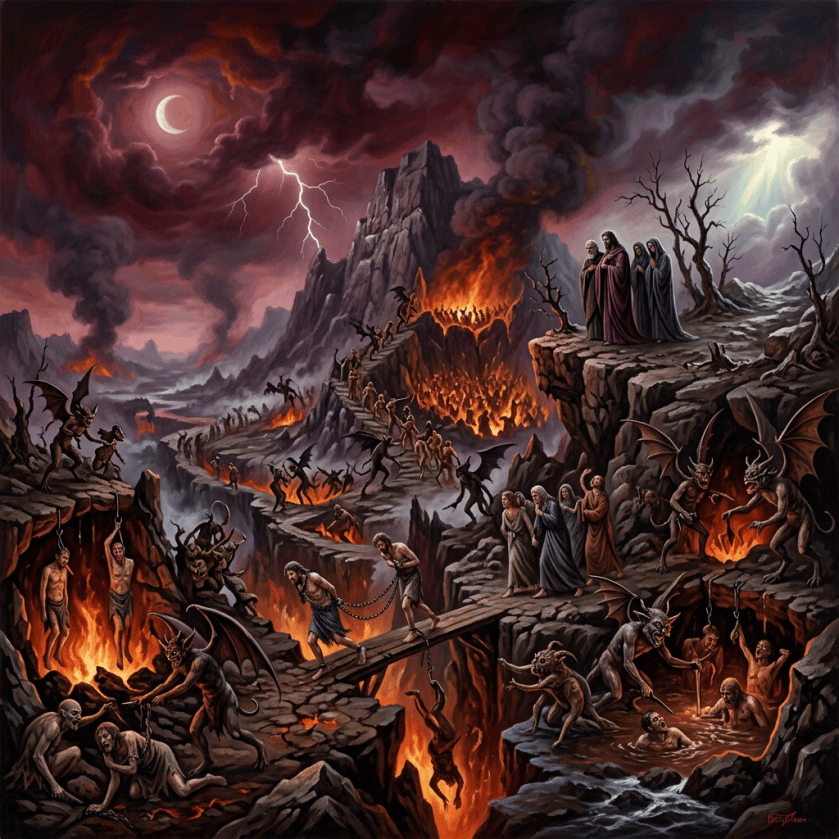
The Apocalypse of Peter is an ancient Christian text that provides a vivid description of the afterlife and the rewards and punishments awaiting the souls of the dead. It is considered one of the key apocryphal works that offers insights into early Christian eschatology.
Overview
- Authorship: Traditionally attributed to the Apostle Peter, though its true authorship remains uncertain.
- Date: Likely composed in the 2nd century, reflecting the beliefs and theological concerns of early Christianity.
- Content: The text describes a revelation given to Peter, wherein he witnesses the torments of sinners and the joys of the righteous. The imagery is highly graphic and serves to articulate the consequences of moral choices made during earthly life.
Themes
- Judgment: The text emphasizes the concept of divine judgment, where souls are judged based on their earthly actions.
- Heaven and Hell: It presents a stark contrast between the suffering of the damned and the bliss of the saved, using detailed metaphors and vivid descriptions.
- Moral Accountability: Encourages readers to live a life of virtue, as it highlights the eternal consequences of one’s life choices.
Significance
Although it was not included in the canonical New Testament, the Apocalypse of Peter sheds light on early Christian thought and reflects the diverse beliefs circulating during the formative years of the Church. Its focus on the afterlife has influenced later Christian literature and theological discussions regarding salvation and damnation.

