

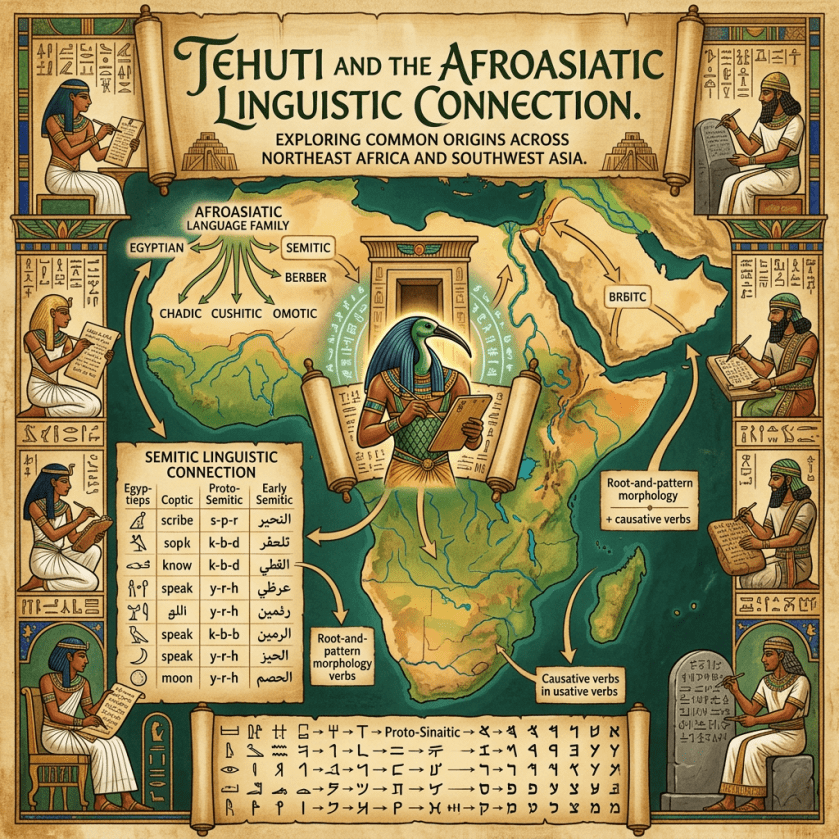
The Semitic Linguistic Connection
(Tuhot) In Afroasiatic linguistics and Biblical studies, there is a notable connection between the name Tehuti and a rare Semitic word for “mind,” “inner parts,” or “wisdom.” In the Northwest Semitic language family (which includes Aramaic and Hebrew), the word תֻּחוֹת (tuhot or tuchot) appears. A famous example is in the Bible (Job 38:36), which asks: “Who has put wisdom in the tuchot (inward parts/mind), or given understanding to the heart?” * Many scholars and linguists note that tuchot historically translates to or parallels the “ibis” bird—the primary symbol of Tehuti. Thus, the concept of the mind or hidden wisdom in these ancient Semitic languages is strongly linked to the name of the Egyptian god of wisdom.
Jacob’s Mother Tongue Aramaic
Aramaic, the language spoken by Jacob and many of the biblical figures, holds significant importance in the history and development of Afrosemitic languages. As a member of the Northwest Semitic language group, Aramaic was widely used throughout the Near East and became a lingua franca in many regions.
During the time of Jacob, Aramaic likely served as a means of communication not only among family members but also with neighboring tribes and nations. The connection to this language underscores the diverse cultural interactions that shaped the narratives found in the Bible.
Aramaic also contributed to the development of other languages, including Hebrew and various dialects still spoken today. The rich linguistic heritage of Aramaic reflects the complexities of the regions where it was spoken, revealing deep connections to faith, culture, and identity among the ancient Semitic peoples. Such a heritage provides valuable insight into the lives and thoughts of those who lived during biblical times, fostering a greater understanding of their experiences and beliefs.

