

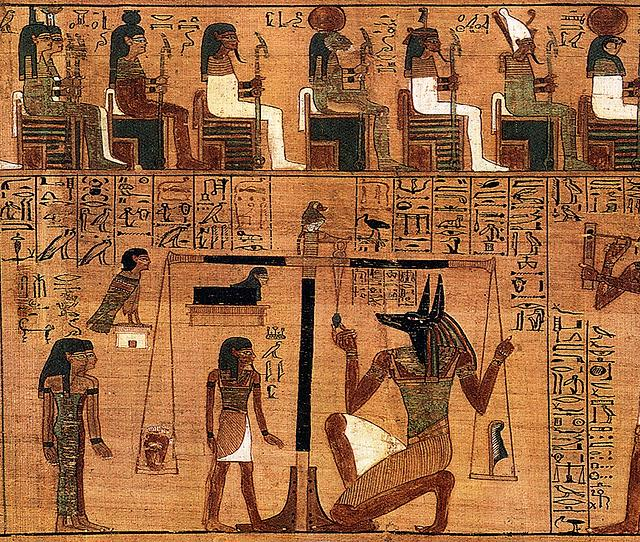
Pert Em Heru (translated as “The Book of Coming Forth by Day” or “The Book of Emerging into the Light”) is the original ancient Egyptian name for what is commonly known today as the Egyptian Book of the Dead. Far from being a book about death, it was viewed by the ancient Egyptians as a vital guidebook for life, rebirth, and spiritual transformation.

What is the Pert Em Heru? The text is a collection of magical spells, prayers, hymns, and incantations written on papyrus. These scrolls were often buried with the deceased to help them navigate the dangers of the Underworld (Duat) and achieve eternal life in the Field of Reeds (Aaru).

Key Themes and Concepts The Weighing of the Heart: One of the most famous sections details the judgment before Ausar. The deceased’s heart (the seat of emotion and memory) was weighed against the feather of Ma’at (truth, justice, and cosmic order). If balanced, the soul passed into paradise. The Negative Confessions: The deceased had to recite a list of 42 declarations to various deities, stating sins they did not commit during their lifetime (e.g., “I have not stolen,” “I have not told lies”). Transformation Spells: The spells provided instructions on how to transform into different divine creatures (like a hawk or a lotus) to overcome obstacles and outsmart monsters in the afterlife.

Evolution of the Texts The Pert Em Heru didn’t just appear overnight; it evolved over thousands of years: Pyramid Texts: Originally carved onto the walls of royal pyramids during the Old Kingdom (strictly for Pharaohs). Coffin Texts: Written inside the coffins of wealthy nobles during the Middle Kingdom. The Book of Coming Forth by Day: Written on papyrus scrolls during the New Kingdom, making it accessible to anyone who could afford to buy one or have it commissioned.
The Weighing of the Heart (Spell 125) One of the most famous and culturally significant parts of the Pert Em Heru is Spell 125, which describes the Weighing of the Heart ceremony. This judgment scene took place in the Hall of Ma’at before the god Ausar and a tribunal of 42 divine judges. Here is how the ancient Egyptians believed the trial proceeded: The Anubis Test: The jackal-headed god Anubis would lead the deceased into the hall and place their heart (the Ib, which held the person’s deeds and conscience) on one side of a golden scale. The Feather of Truth: On the opposite side of the scale sat the feather of Ma’at, representing truth, cosmic balance, and justice. The Recording: Tehuti, the ibis-headed god of wisdom and writing, stood by with a reed pen and scroll to record the final verdict. The Threat of Aummit: Squatting beneath the scales was Aummit (the “Devourer of the Dead”)—a monster part-crocodile, part-lion, and part-hippopotamus. If the heart was heavy with sin and failed the test, Aummit would instantly devour it, causing the soul to suffer a “second death” and cease to exist forever. The Reward: If the heart was perfectly balanced with the feather, the deceased was declared “true of voice” (ma’a kheru) and guided by Heru to meet Ausar, granting them entry into the eternal paradise of the Field of Reeds.

The Scribes and Production Because the afterlife was a high-stakes journey, the production of these papyrus scrolls was a major industry in ancient Egypt. Pre-made Templates: Scribes in workshops often mass-produced scrolls, leaving blank spaces where a buyer could later write their own name and titles. High-quality scrolls with vivid, colorful illustrations cost a significant amount of money, while simpler versions with basic text were more affordable for the middle class. Personalized Spells: Wealthy elites commissioned completely custom scrolls, choosing specific spells they felt they would need most based on their life or fears of the underworld.

