

Introduction
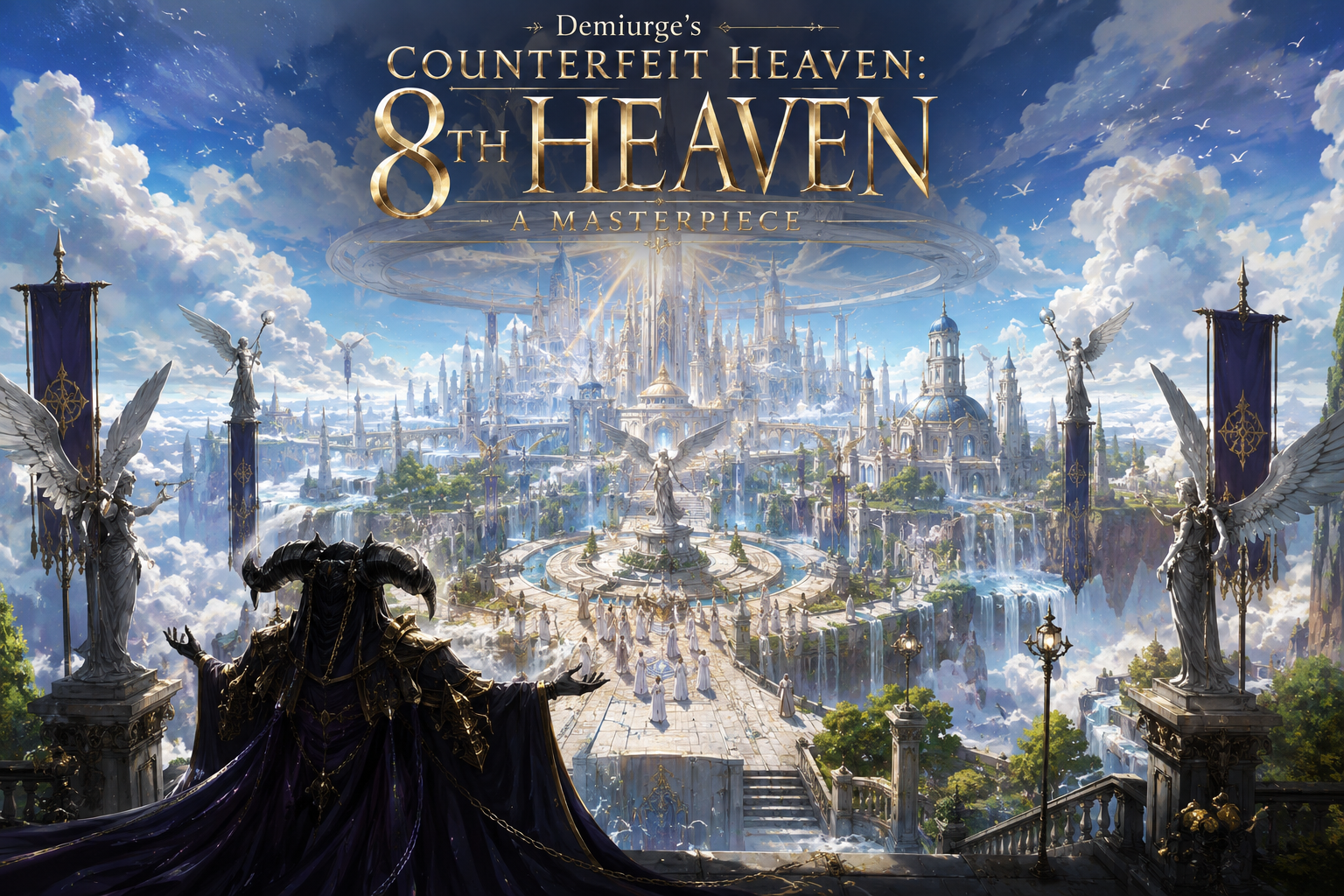
In the vast landscape of philosophical and spiritual thought, the concept of the Demiurge has long been a point of contention and fascination. The Demiurge, often depicted as a craftsman-like figure responsible for the creation of the material world, has been interpreted in various ways across different cultural and theological frameworks. In this exploration, we delve into the notion of “8th Heaven,” positioning it as a metaphorical and literal counterpart to the idea of a counterfeit heaven crafted by the Demiurge.
The Concept of the Demiurge
The Demiurge originates from Platonic philosophy but gained significant prominence through Gnostic texts. Unlike the benevolent God of mainstream Abrahamic faiths, the Gnostic Demiurge is seen as a flawed or misguided creator, responsible for trapping souls in the material realm. This introduces the idea that our tangible existence may be a mere shadow of a higher reality—a counterfeit heaven.
The Essence of the 8th Heaven
In many spiritual traditions, the heavens represent levels of consciousness or realms of existence. The concept of an “8th Heaven” can be interpreted as a transcendent state that exists beyond traditional religious structures. It symbolizes an ultimate reality that surpasses the confines of the Demiurge’s creation.
Characteristics of 8th Heaven:
- Transcendence: Unlike the material realities created by the Demiurge, the 8th Heaven is a realm of pure consciousness and enlightenment.
- Unity: This heaven signifies oneness, where all beings are interconnected, contrasting against the fragmented nature of earthly existence.
- Truth and Illumination: It represents the unveiling of ultimate truths—the knowledge that transcends the deception of sensory experiences propagated by the Demiurge.
The Masterpiece of Miscreation
Demiurge’s counterfeit heaven can be seen as a masterpiece in the twisted sense that it represents the height of creative expression, albeit with flawed intentions. The material world, with all its complexities, serves a purpose— to teach, challenge, and ultimately guide souls towards seeking the truth beyond the superficial glories of the physical realm.
Reflections on the Counterfeit:
- Illusion: The allure of the 8th Heaven often tempts souls to seek truth within illusions, diverting them from the spiritual path.
- Awakening: The journey towards recognizing the counterfeit nature of the Demiurge’s creation sparks a quest for enlightenment, urging individuals to reach beyond their earthly conditions.
Ogdoad
The Ogdoad is a group of eight primordial deities in ancient Egyptian religion, particularly associated with the city of Hermopolis (called Khemenu, meaning “City of Eight”).


The Ogdoad consists of four male-female pairs, each representing a primordial force that existed before creation:
| Male | Female | Represents |
|---|---|---|
| Nun | Naunet | The primordial waters (chaos) |
| Heh | Hauhet | Infinity or endlessness |
| Kek | Kauket | Darkness |
| Amun | Amaunet | Hiddenness, the unseen, or mystery |
Symbolism
- The male deities are often depicted with frog heads.
- The female deities are often depicted with snake heads.
- Together they personify the chaotic state before the universe existed.
Creation Myth
According to the Hermopolitan creation tradition:
- The Ogdoad existed within the endless waters of chaos.
- Their interactions gave rise to a primordial mound then the cosmic egg of Khepere.
- From this emerged the sun god RA/HERU from the Lotus , who began creation by bringing light and order into the world.
Spiritual Meaning
Modern esoteric traditions sometimes interpret the Ogdoad as representing:
- Balance between masculine and feminine energies.
- The transition from chaos to order.
- The eight foundational principles underlying creation.
- Hidden potential before manifestation.
While these symbolic interpretations are popular today, they go beyond the original religious role of the Ogdoad in ancient Egyptian belief.
The Ogdoad is one of several major Egyptian creation traditions, alongside those centered at Heliopolis (the Ennead) and Memphis (the Memphite theology).
Conclusion
“Demiurge’s Counterfeit Heaven: 8th Heaven” serves as a poignant reminder of the duality present in spiritual exploration. While the Demiurge may have crafted a beautiful yet deceiving world, the existence of the 8th Heaven points towards an eternal quest for truth, illuminating paths towards genuine understanding and connection with the divine essence that transcends creation itself.
By recognizing and striving for this higher state of being, we embrace the potential of transforming our reality, ultimately aiming to ascend from the counterfeit into the authentic, luminous embrace of 8th Heaven.

