

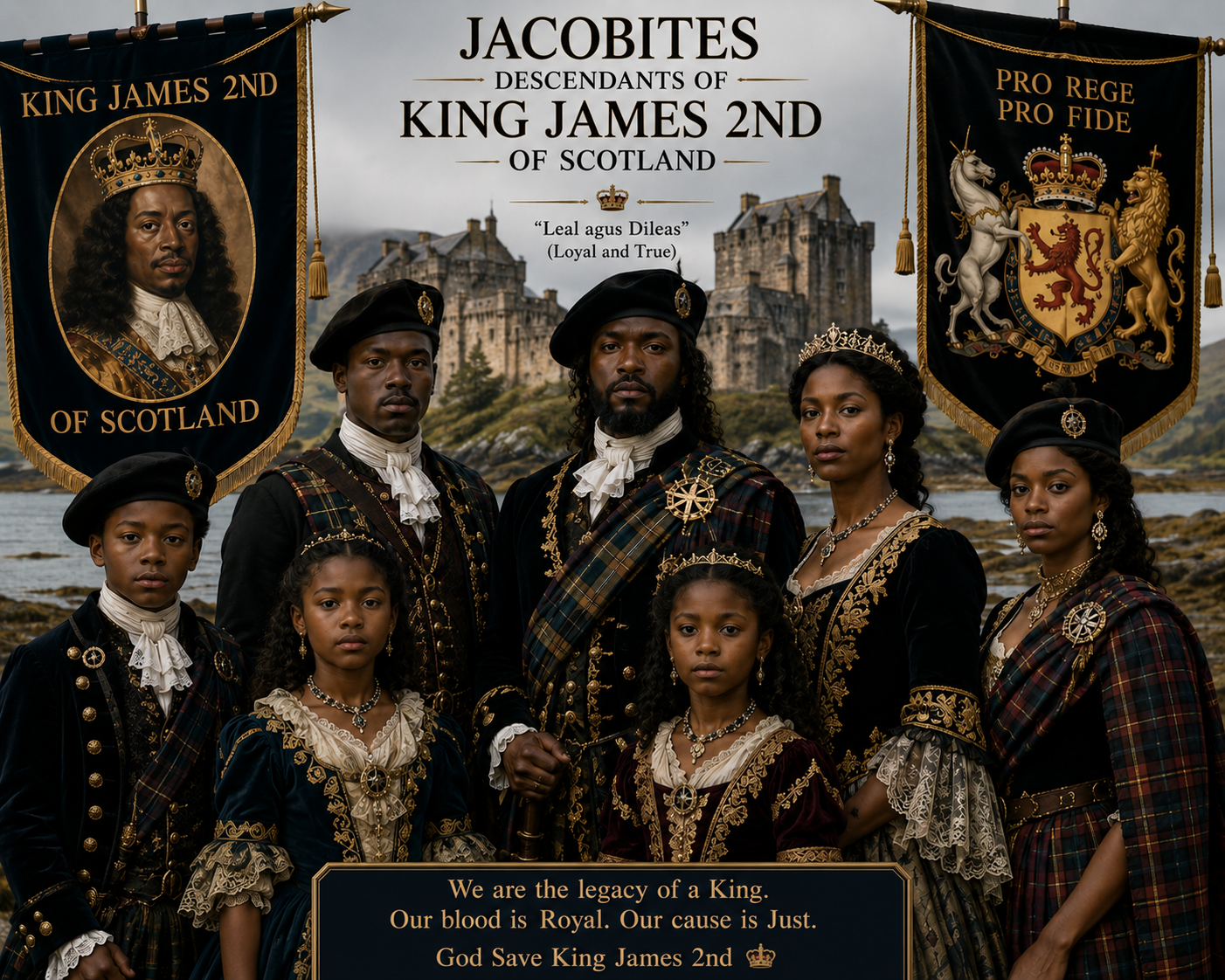
The Banished followers of James Stewart as King would be known as Jacobites
Supporters of the exiled King James II line (who was Scottish, of the male Stuart line) and his descendants were known as Jacobites (from Jacobus, the Latin for James)
The Jacobites were supporters of the restored Stuart monarchy in Britain, particularly in the late 17th and 18th centuries, following the deposition of King James II of England (James VII of Scotland) in the Glorious Revolution of 1688. The movement took its name from “Jacobus,” the Latin form of James.
Key Points about the Jacobites and Their Connection to King James II:
- Origins: The Jacobite cause emerged after King James II was ousted from the throne due to his Catholic faith and the concerns of Protestant factions in England. His supporters believed in his divine right to rule and sought to restore him and his descendants to the throne.
- Jacobite Uprisings: The movement culminated in several uprisings, notably in 1715 and 1745. The 1745 uprising, led by Charles Edward Stuart (Bonnie Prince Charlie), aimed to reclaim the British throne for his father, James Francis Edward Stuart, the Old Pretender, son of James II.
- Supporters: The Jacobites were predominantly composed of Scottish Highlanders, but they also garnered support from Irish Catholics and some English Royalists. The movement was fueled by a mix of loyalty to the Stuart family, opposition to English rule, and a desire for religious freedom.
- Cultural Legacy: The Jacobite risings have left a lasting impact on Scottish culture, inspiring music, literature, and folklore. The image of Bonnie Prince Charlie remains a romantic symbol of the Jacobite cause.
- Aftermath and Legacy: The defeat of the Jacobites at the Battle of Culloden in 1746 effectively ended the Jacobite risings and marked the beginning of a period of repression against Highland culture and society. Many Jacobite descendants faced persecution and were often forced to flee or assimilate.
The descendants of King James II, through various family lines, continued to exist and some still claim ties to the Jacobite cause today. The legacy of the Jacobites remains a significant part of Scotland’s historical narrative.

