

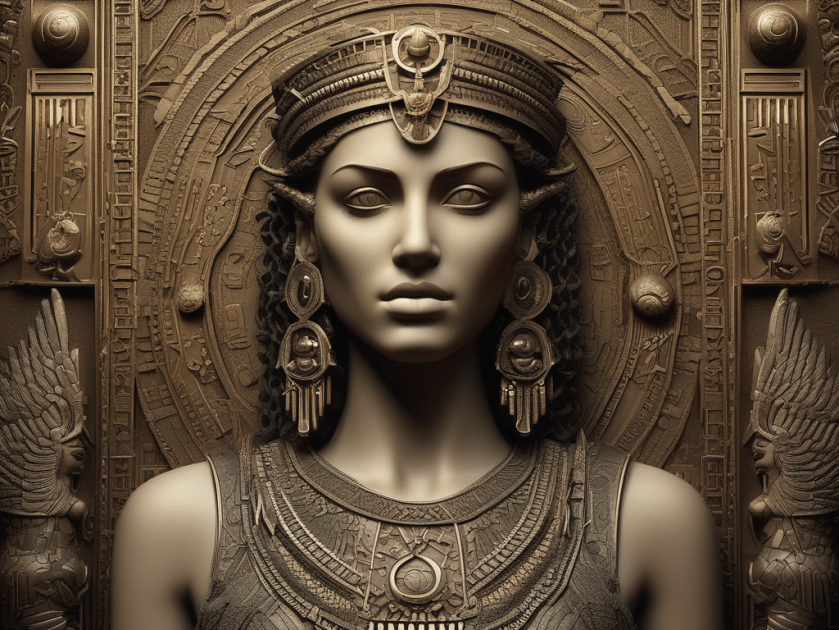
Semiramis: The Legendary Queen of Babylon
Semiramis is a legendary figure known for her association with the ancient city of Babylon. According to historical accounts, she was a powerful and influential queen who reigned over the Babylonian Empire. Her story has been the subject of numerous myths, legends, and literary works throughout the centuries.
Semiramis is often depicted as a skilled military leader and a wise ruler, known for her ambitious building projects and contributions to the cultural and economic development of Babylon. Her reign is also linked to the construction of the famous Hanging Gardens of Babylon, one of the Seven Wonders of the Ancient World.
The figure of Semiramis has captured the imagination of many, inspiring countless works of art, literature, and drama. Whether she was a historical queen or a legendary figure, Semiramis continues to be an intriguing and iconic symbol of ancient power and splendor.
Nimrod Her Son
Nimrod: The Son of Semiramis
Nimrod is a figure connected to the legendary queen of Babylon, Semiramis. According to ancient traditions and myths, Nimrod is believed to be the son of Semiramis. His story is intertwined with the legacy of Babylon and its influential rulers.
Nimrod is often portrayed as a powerful and ambitious leader, credited with the construction of significant architectural marvels in ancient Mesopotamia. His exploits and endeavors, whether historical or legendary, have left a lasting imprint on the narratives of ancient civilizations.
The relationship between Nimrod and Semiramis is a recurring theme in various artistic and literary works, adding to the mystique and allure surrounding the legendary queen and her renowned son.
Through the ages, the tales of Nimrod and Semiramis have captivated the imaginations of storytellers and historians alike, underscoring their enduring status as iconic figures from the ancient world.
Tammuz
Tammuz is an ancient Mesopotamian deity associated with the Sumerian and Akkadian civilizations. Often depicted as a vegetation god, Tammuz was believed to be responsible for the cycle of life, death, and rebirth in nature. His worship involved rituals and ceremonies commemorating his seasonal journey, reflecting the agricultural cycles of planting, growth, harvest, and dormancy.
The myth of Tammuz and his consorts, particularly his beloved goddess Inanna (Ishtar), forms a significant aspect of ancient Mesopotamian religious beliefs and folklore. Tammuz’s descent into the netherworld and subsequent return to the land of the living symbolized the changing seasons and the perpetual renewal of life.
Throughout Mesopotamian history, Tammuz’s cult and mythology exerted a profound influence on religious practices, literature, and rituals. His enduring presence in the ancient Near East underscores the cultural significance and perennial fascination with deities associated with fertility, agriculture, and the natural world.
In ancient Mesopotamian tradition, the worship and commemoration of Tammuz were connected to agricultural cycles and the changing of the seasons. The festival dedicated to Tammuz, known as the “Akitu” festival, was typically celebrated around the time of the spring equinox, marking the beginning of the agricultural year. This festival was a significant occasion involving rituals and ceremonies that honored Tammuz, the deity associated with fertility and the cycle of life, death, and rebirth in nature.
Here are names of Gods throughout history that were said to have been born by a virgin on 25th December
- Heru: In ancient Egyptian mythology, the god Heru, the son of the goddess Auset, was believed to have been born to a virgin on the 25th of December. His birth was associated with the rebirth of the sun and the beginning of longer daylight hours.
- Mithras: The god Mithras, worshipped in the Roman Empire, was said to have been born from a rock or from a virgin on December 25th. Mithraism was a prominent religion in the Roman world, and Mithras’ birthdate coincided with the winter solstice, symbolizing the victory of light over darkness and the renewal of life.
- Krishna: In Hinduism, the deity Krishna, a significant figure in the Bhagavad Gita and the Mahabharata, is believed to have been born to the virgin Devaki on the 25th of December. His birth is celebrated as the festival of Janmashtami and holds profound spiritual significance for devotees of Krishna.
- Dionysus: In ancient Greek mythology, the god Dionysus was often associated with the winter solstice and was believed to have been born from a virgin on or around December 25th. Dionysus’s birth and resurrection were linked to agricultural symbolism and the cycle of life, death, and rebirth in nature.
- Attis: The Phrygian god Attis was revered in the ancient Mediterranean world, and his mythology included the tale of his birth from a virgin on December 25th. The story of Attis was intertwined with the themes of fertility, vegetation, and the seasonal rhythms of the natural world.
- THAMMUZ A Babylonian God, born 25th December, by a Virgin around 400 YEARS before Jesus.
- HERMES A Greek God, born 25th December, by a Virgin around 200 YEARS before Jesus.
- ADONIS A Phoenician God, born 25th December, by a Virgin around 200 YEARS before Jesus.
- JESUS CHRIST A Roman God, born 25th December, by a Virgin around 1-30 AD.
These deities, from diverse cultural and religious traditions, share the motif of being born to a virgin on the 25th of December, a theme that resonates with the symbolism of celestial and natural renewal across different civilizations throughout history.
 Digital Information Publishing