

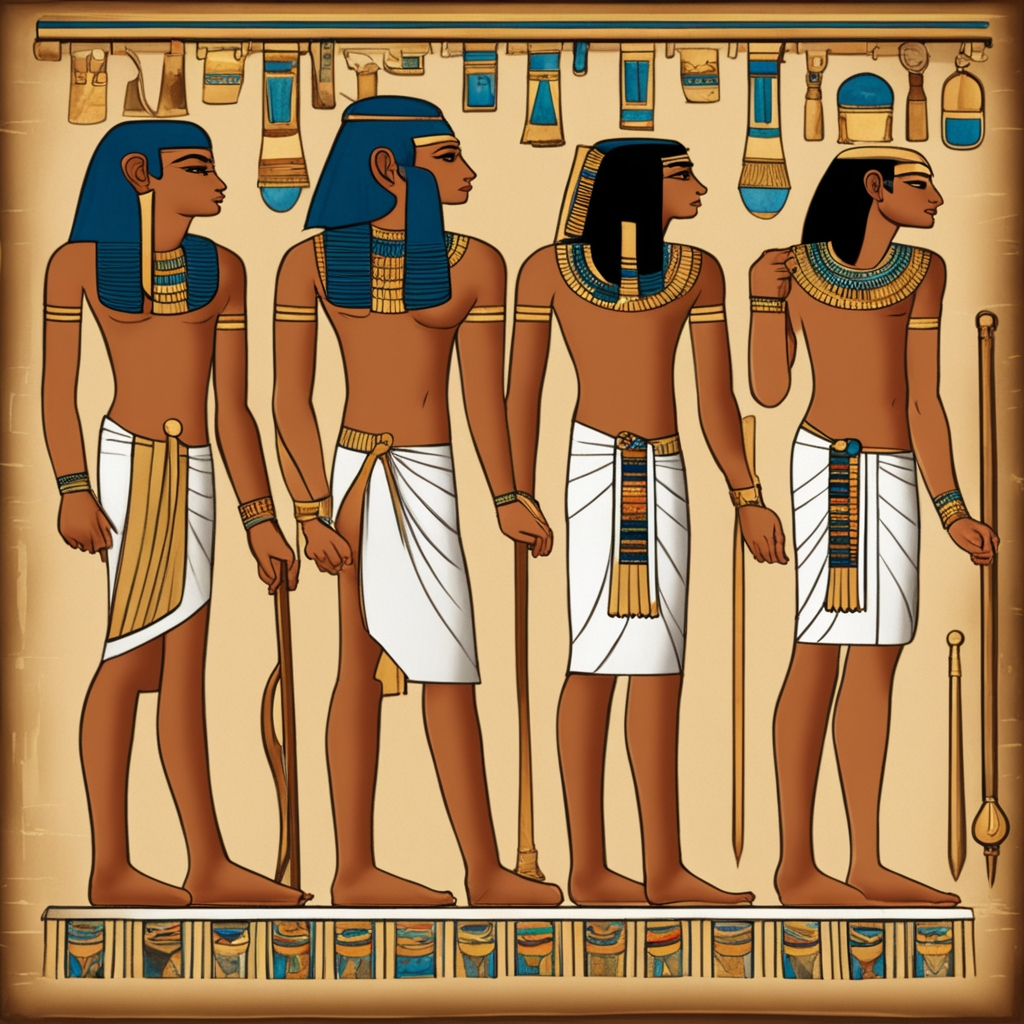
The first recorded circumcisions date back to ancient Egypt, where it was a common practice. Historical evidence suggests that circumcision was performed for religious, cultural, and hygienic purposes. The procedure has been a significant practice in various cultures and religions throughout history, with its origins traced back to ancient civilizations.
Pert Em Heru
Pert Em Heru
Pert Em Heru, also known as “Book of Coming Forth by Day” or the “Book of the Dead,” is an ancient Egyptian funerary text that served as a guide for the deceased in the afterlife. It contains various spells, incantations, and instructions to help the soul navigate the perilous journey to the afterlife and attain immortality. The text was written on papyrus scrolls and often accompanied the deceased in their tombs. It was a central part of ancient Egyptian funerary practices and beliefs about the afterlife.
Metu Neter
Metu Neter, which translates to “The Egyptian Tree of Life” in English, is a philosophical system that seeks to provide insight into the nature of existence and the human experience through the lens of ancient Egyptian spirituality. It draws from the metaphysical and spiritual beliefs of ancient Egypt, incorporating principles such as Ma’at (the concept of truth, justice, and harmony) and exploring the connections between the individual, the universe, and the divine. This philosophical framework encompasses various aspects of life, including ethics, cosmology, and the quest for spiritual enlightenment.
 Digital Information Publishing