
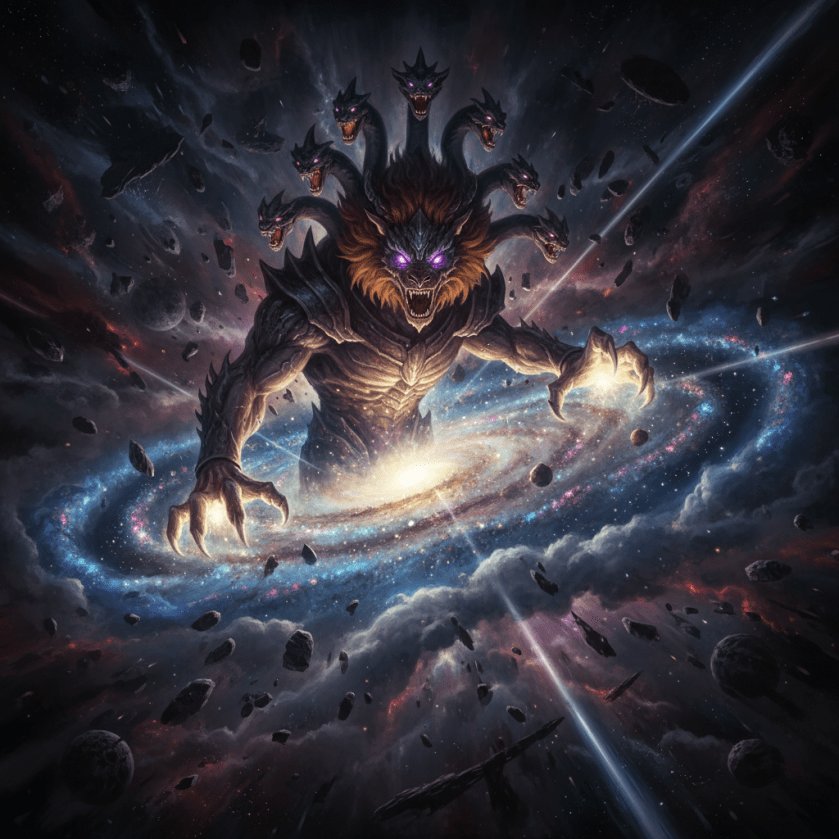
The concept of the Demiurge has its roots in Gnostic philosophy, where it is often depicted as a creator god who fashions the material world but is oblivious to a higher spiritual reality. In this narrative, the Demiurge can be seen as a craftsman who builds the cosmic prison, a flawed and imperfect universe that entraps souls and diverges from divine perfection.
The Creation of the Material Realm
- Inspired Creation: The Demiurge, influenced by the realm of the divine, attempts to manifest the material world. However, this creation is inherently flawed, reflecting the Demiurge’s limited understanding and separation from the true spiritual essence.
- Imposition of Order: In an effort to impose order upon chaos, the Demiurge structures the cosmos with laws and boundaries. This attempt to create harmony results in a rigid framework where souls become trapped in physical forms, disconnected from their divine origins.
- The Sensory Illusion: The material world becomes a sensory illusion, distracting souls from their true purpose. The Demiurge, unaware of the higher spiritual realities, mistakenly believes this distraction is the fulfillment of existence.
The Cosmic Prison
- Bound by Matter: Souls within the cosmic prison are bound by the material aspects of life. They experience desires, fears, and limitations that prevent them from recognizing their divine heritage and true potential.
- The Architect’s Delusion: The Demiurge, envisioning itself as a god, fails to realize the suffering it imposes on the souls within its creation. This delusion of grandeur reinforces the notion of a cosmic prison where freedom is an illusion.
- Escape and Liberation: Gnostic teachings emphasize the possibility of escape from this prison through knowledge (gnosis). By awakening to their true nature, souls can transcend the limitations imposed by the Demiurge and return to the spiritual realm.
Sacred Geometry
Sacred geometry refers to the visual representational qualities of shapes, forms, and patterns that are believed to have spiritual significance and convey deeper meanings about the universe. This concept transcends mere aesthetics, as it is often linked to religious and philosophical ideas about the nature of existence, creation, and the cosmos.
The Significance of Sacred Geometry
- Universal Language: Sacred geometry is considered a universal language that translates the interconnectedness of all things. It reflects the underlying principles that govern the universe, revealing harmony, balance, and order within the chaos of existence.
- Symbols of Creation: Shapes like the circle, square, and triangle are seen as fundamental elements that encapsulate the essence of creation. For example, the circle represents unity and wholeness, while the triangle often symbolizes the trinity in various traditions.
- Architectural and Artistic Use: Throughout history, many cultures have utilized sacred geometry in architecture and art, creating sacred spaces that resonate with spiritual energy. Structures like cathedrals, temples, and even mandalas are designed to reflect these geometrical principles, inviting contemplation and transcendence.
Examples of Sacred Geometry
- Flower of Life: This intricate design consists of multiple overlapping circles, symbolizing the cycle of creation and the interconnectedness of all life.
- Golden Ratio: Often found in nature, the golden ratio (approximately 1.618) is a mathematical ratio that appears in various forms, from the spirals of galaxies to the proportions of the human body, suggesting perfection and beauty.
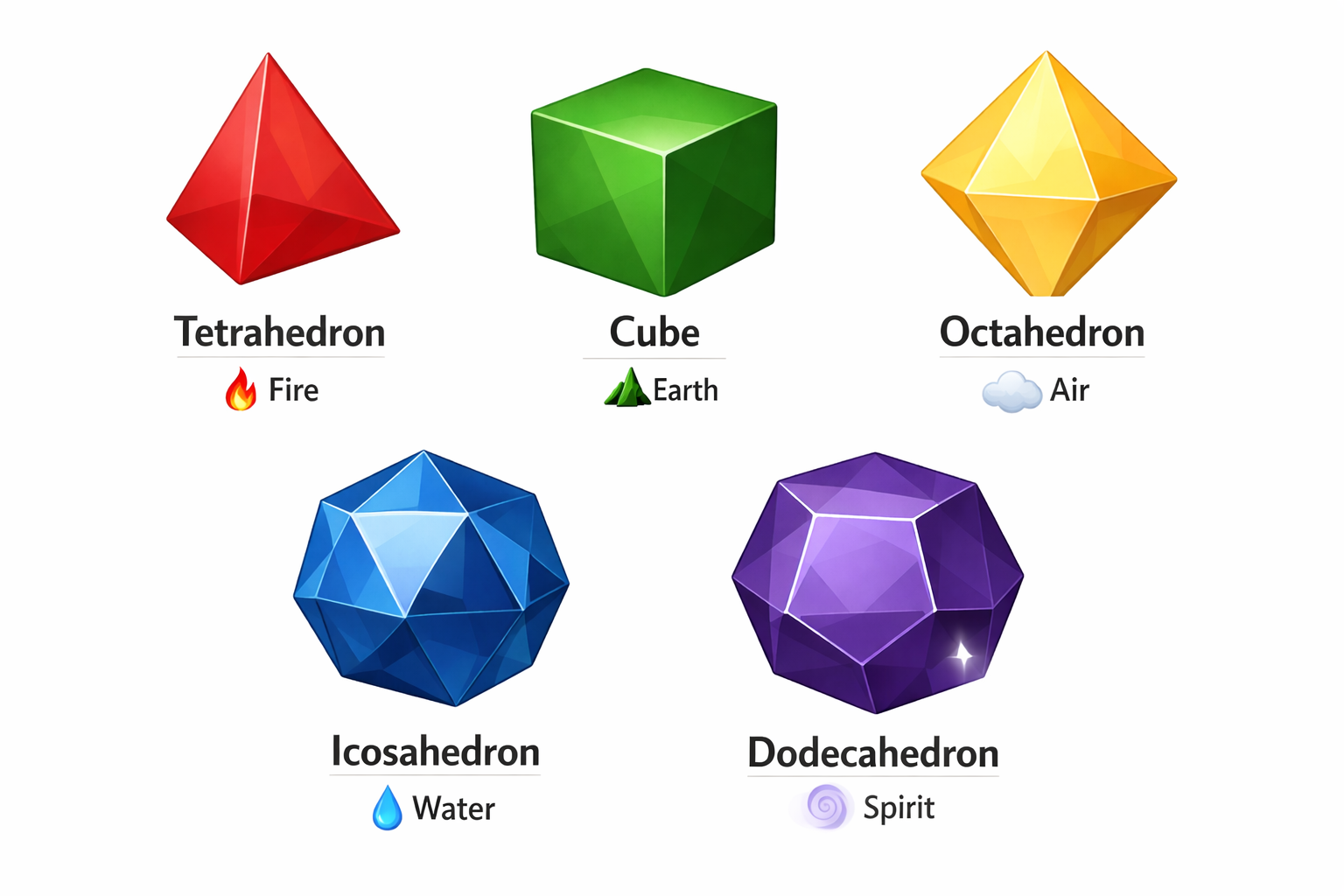
- Platonic Solids: These five geometric shapes (tetrahedron/fire, cube/Earth, octahedron/air, dodecahedron/spirit, and icosahedron/water) are believed to represent the elements of earth, air, fire, water, and spirit, serving as foundational symbols of the physical and metaphysical realms.
 Digital Information Publishing