
Introduction
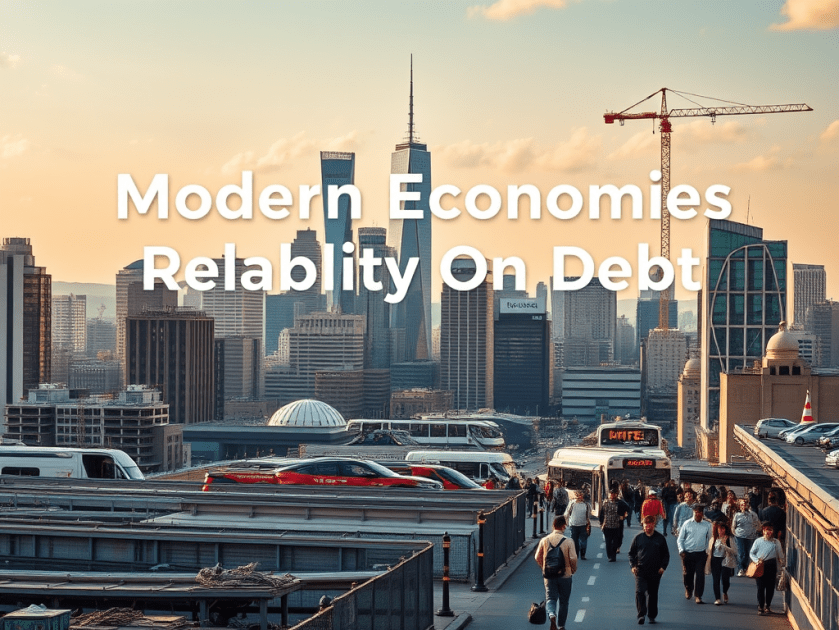
In contemporary society, debt has become an integral part of economic functionality. From individual households to large corporations and governments, borrowing is often seen as a practical, necessary strategy for growth and stability.
The Role of Debt in Economic Growth
- Investment in Infrastructure: Governments frequently take on debt to fund large infrastructure projects which can stimulate economic activity and create jobs.
- Consumer Spending: Consumers often rely on credit to make significant purchases, driving demand for goods and services, which is essential for economic growth.
- Business Expansion: Companies may take on debt to invest in new technologies, expand operations, or enter new markets, which can lead to increased productivity and competitiveness.
Types of Debt
- Public Debt: Incurred by governments to finance deficits and public services without immediate taxation.
- Private Debt: Involves loans and credit taken on by individuals or businesses. This includes mortgages, credit cards, and business loans.
- Corporate Debt: Companies issue bonds or obtain loans to finance operational costs or expansions.
Risks Associated with Debt
- Over-leverage: When an entity takes on too much debt, it can lead to financial instability or default.
- Interest Rate Fluctuations: Rising interest rates can increase the cost of servicing debt, affecting budgets for both consumers and governments.
- Economic Vulnerability: High levels of national debt can limit a government’s ability to respond to economic crises.
“Money = debt” is a catchy phrase, but it’s an oversimplification. There is some truth behind it—especially in modern financial systems—but it’s not the whole story.
Where the idea comes from
In today’s economies, much of the money supply is created through lending:
- When commercial banks (like HSBC or Barclays) issue a loan, they don’t hand out pre-existing cash.
- Instead, they create new money by crediting your account.
- That loan becomes:
- Your asset (you have money to spend)
- The bank’s asset (you owe them repayment)
So in that sense, a lot of money exists because someone is in debt.
Why people say “money = debt”
- Most money in circulation comes from loans
- If all debts were suddenly repaid, much of that money would disappear
- Interest means more must be repaid than was created
This leads some to argue the system requires continuous borrowing to function.
But it’s not entirely true
Money ≠ debt in a strict sense:
- Cash issued by central banks (like the Bank of England) is not someone’s personal debt
- Government spending can inject money without direct corresponding private debt
- Assets (houses, stocks, goods) exist independently of debt
Also, debt is a relationship, while money is a tool for exchange and accounting.
The deeper implication
This system:
- Encourages growth (because loans fund investment)
- But can create instability (if too much debt builds up)
That’s why financial crises often involve debt problems—like the 2008 financial crisis.
 Digital Information Publishing