

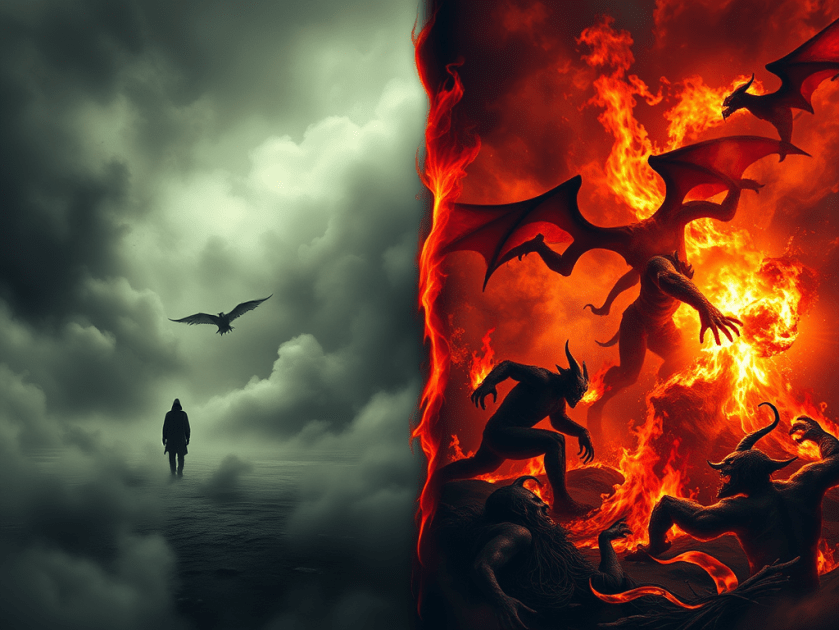
Spiritual Hell vs. Physical Hell
Spiritual Hell
Spiritual hell is often perceived as an emotional or existential experience rather than a physical location. It encompasses feelings of despair, guilt, and spiritual disconnection.
- Characteristics:
- Emotional Distress: Involves deep feelings of sadness, confusion, or emptiness often stemming from a lack of purpose or moral conflict.
- Isolation from the Divine: Individuals may feel separated from God, spirituality, or a supportive community, leading to significant inner turmoil.
- Moral and Existential Crisis: This form of hell may manifest during times of doubt or questioning of one’s beliefs and values.
- Notable References:
- Found in various religious and philosophical teachings that discuss the consequences of sin or the importance of spiritual well-being.
- Literature often portrays characters facing internal demons and struggles that reflect this type of suffering.
Physical Hell
In contrast, physical hell is commonly depicted as a literal place of punishment characterized by pain and suffering. It is often described within various religious contexts as a destination for the damned.
- Characteristics:
- Physical Torment: Typically involves extreme suffering, often illustrated with fire, darkness, and various forms of agony.
- Eternal Damnation: Viewed as a final destination for those who have committed significant wrongs or failed to repent.
- Symbolic Justice: Represents a form of cosmic justice, where individuals face the consequences of their actions in life.
- Notable References:
- Described in religious scriptures and mythologies, commonly illustrated in vivid imagery that emphasizes the horrors of punishment.
- Cultural depictions often vary, emphasizing different elements such as tormenting demons or isolation in darkness.
Man is two types of beings human and spiritual. Therefore there has to be two realms of existence.
Human Realm
Earth is the human realm and also the lowest point of the material cosmos thus making it the most dense. This is hell in and of itself referring to the lowest point anywhere.
Spirit Realm
Astral Planes is the spirit realm embodied by other spirit beings with dark and sinister intentions whose goal is cause suffering and pain.
Hell According To Gnosticism
Hell According To Gnosticism
In Gnosticism, the concept of hell is deeply intertwined with its views on the material world and the nature of the divine. Gnostics believed that the physical world was created by a lesser god, often referred to as the Demiurge, who is associated with ignorance and evil. This perspective significantly influences their understanding of hell and spiritual suffering.
- Characteristics:
- The Material World as Hell: Gnostics view the material world itself as a form of hell where souls are trapped in physical bodies. This existence is often considered flawed and corrupt.
- Ignorance and Disconnection: Suffering arises from ignorance of the true divine reality and the Gnostic belief in a higher spiritual truth that lies beyond the material.
- Escaping the Demiurge: The goal for Gnostics is to gain gnosis (spiritual knowledge) to escape the clutches of the Demiurge and return to the Pleroma, or the fullness of divine reality.
- Notable References:
- Gnostic texts such as the Apocryphon of John and the Gospel of Thomas explore themes related to the nature of hell and the cosmic struggle between light and darkness.
- Hell is often depicted metaphorically rather than as a place of fire and brimstone, emphasizing spiritual estrangement and the quest for enlightenment.
Tartarus
Tartarus
Tartarus is a significant concept in ancient Greek mythology and literature, often depicted as a deep abyss or a part of the underworld that serves as a place of punishment for the wicked. It is distinct from Hades, the realm of the dead, and is characterized by its severe and dark nature.
- Characteristics:
- Deep Abyss: Tartarus is described as being far beneath Hades, even further removed from the surface of the earth, symbolizing a lower realm of suffering.
- Punishment of the Damned: It is known for housing the souls of the most egregious sinners, including figures like Titans and those who committed severe crimes against the gods.
- Guarded by the Furies: Mythology often depicts it as being guarded by monstrous beings, ensuring that the condemned are eternally punished without escape.
- Notable References:
- In works like Homer’s Iliad and Hesiod’s Theogony, Tartarus is referenced as a place of divine retribution, contrasting with the more neutral realm of Hades.
- The concept has also influenced later literature and religious thought, where the idea of a segregated space for punishing the wicked finds parallels in various beliefs about the afterlife.
 Digital Information Publishing