

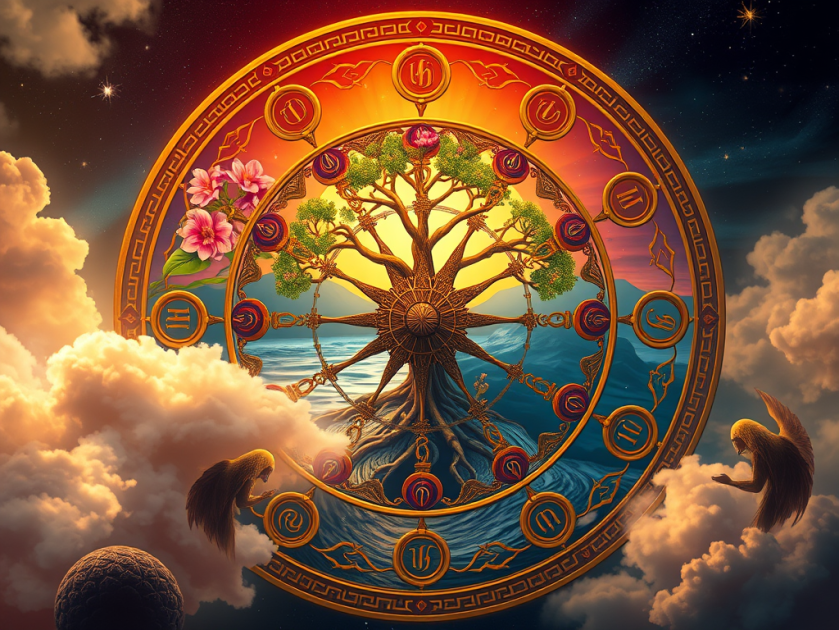
Wheel of Samsara (Reincarnation)
The concept of the Wheel of Samsara, also known as the cycle of birth, life, death, and rebirth, is central to various Eastern philosophies and religions, particularly Hinduism and Buddhism. Here’s an overview of the key elements:
What is Samsara?
Samsara refers to the continuous cycle of existence that all beings undergo. It is characterized by the following stages:
- Birth: The beginning of life in a new form, influenced by past actions (karma).
- Life: The experiences and actions taken during one’s lifetime that contribute to future reincarnations.
- Death: The transition from one life to the next, where the physical body ceases to function.
- Rebirth: The emergence into a new existence, shaped by accumulated karma.
The Nature of Karma
Karma is the law of cause and effect, where every action has implications for future existences. Good deeds (positive karma) can lead to favorable rebirths, while bad deeds (negative karma) may result in less desirable circumstances. Final Result
Breaking Free from Samsara
The ultimate goal within the Wheel of Samsara is to attain liberation (moksha in Hinduism, or nirvana in Buddhism). This is achieved through:
- Understanding of Reality: Realizing the nature of existence and the self.
- Moral Conduct: Engaging in ethical behavior and compassion towards all beings.
- Meditation and Mindfulness: Cultivating mental clarity and emotional stability to transcend the cycle.
Archonic Reincarnation Trap
Archonic Reincarnation Trap
The concept of the Archonic Reincarnation Trap relates to certain interpretations of the Wheel of Samsara and the nature of reincarnation, particularly in Gnostic and esoteric thought. Here’s an overview of the key elements:
What Are Archons?
Archons are often described as negative entities or forces that seek to control or manipulate souls as they navigate through the cycle of reincarnation. They are thought to impose limitations on spiritual growth and understanding.
The Mechanism of the Trap
The Archonic Reincarnation Trap is perceived as a cycle designed by these entities to keep souls tethered to the material realm. The process generally involves:
- Deceptive Illusions: Archons may create false narratives or illusions that distract the soul from its true spiritual path.
- Emotional Attachments: By fostering strong emotional ties to the physical world, Archons can prevent individuals from realizing their potential for liberation.
- Fear and Confusion: Through inducing fear, doubt, and uncertainty, Archons can manipulate souls into staying within the cycle of rebirth rather than seeking liberation.
Breaking Free from the Trap
To escape the Archonic Reincarnation Trap, individuals may need to pursue deeper spiritual insights and practices, which can include:
- Self-Awareness: Developing a keen understanding of one’s thoughts, emotions, and motivations to recognize external manipulations.
- Spiritual Knowledge: Engaging with esoteric teachings and philosophies that expose the nature of Archons and the illusion of material existence.
- Inner Work: Practices like meditation, reflection, and shadow work can help dismantle emotional attachments and fears that bind one to the cycle.
Gnosis
Gnosis
Gnosis is a term derived from the Greek word for “knowledge” and refers to a type of spiritual knowledge that transcends ordinary understanding. In various esoteric and mystical traditions, Gnosis is regarded as the key to enlightenment and liberation from the material world. Here are the key aspects of Gnosis:
Understanding Gnosis
Gnosis is not just intellectual knowledge; it is a deep, experiential understanding of the divine and the nature of reality. This knowledge is often characterized by:
- Personal Experience: Gnosis is gained through direct experience rather than through teachings or texts alone.
- Intuitive Insight: It involves a profound intuition about the self, the universe, and the divine, leading to a sense of unity with all that exists.
- Spiritual Awakening: The process often leads to an awakening of consciousness, allowing individuals to see beyond the illusions of the material world.
Gnostic Thought
In Gnostic belief systems, this knowledge is often viewed as hidden or concealed from the common person and requires a journey of self-discovery to uncover. Key elements include:
- Dualism: Gnosticism often posits a duality between the spiritual and the material worlds, viewing the latter as flawed or deceptive.
- The Divine Spark: Many Gnostics believe that within every individual lies a divine spark that must be awakened and realized.
- Liberation through Knowledge: Gnosis is seen as the means through which individuals can liberate themselves from the confines of the material world and the influences of Archons.
Path to Gnosis
The journey toward achieving Gnosis typically involves various practices and disciplines, such as:
- Meditation: Engaging in meditation to quiet the mind and listen to inner wisdom.
- Contemplation: Reflecting on spiritual truths and seeking a deeper understanding of one’s inner self.
- Study of Sacred Texts: Delving into Gnostic scriptures and teachings to gain insights into the nature of existence.
Conclusion
Gnosis is a significant concept within many esoteric traditions, representing the path to true understanding and liberation from the cycles of Samsara and the Archonic Reincarnation Trap. It emphasizes the importance of inner knowledge and personal experience in the quest for enlightenment.
 Digital Information Publishing