

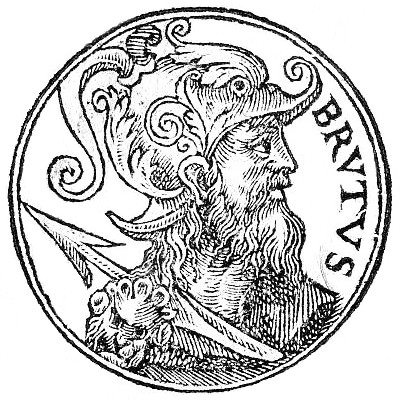
Brutus of Troy is a legendary figure credited with founding London, referred to as “New Troy” in some tales. According to myth, he was the great-grandson of Aeneas, a Trojan hero, who escaped the fall of Troy and embarked on a journey that would eventually lead him to the British Isles.
The Legend of Brutus
Brutus is said to have left Troy after a series of prophecies directed him to find a new home. His adventures brought him to various locations before he arrived in Britain, where he established a settlement. This marks the mythical birth of London, a city that would grow to be one of the greatest in the world.
Brutus is often depicted as a noble leader, embodying the virtues of strength and bravery. His story is not only about founding a city but also symbolizes the migration of people and cultures following the devastation of war.
Gog and Magog: The Giants of London
In the lore surrounding Brutus, he encounters the giants Gog and Magog. These figures represent the primal forces of chaos and resistance that stood against Brutus and his followers. According to the legends, Gog and Magog were formidable opponents, giants who terrorized the land before being defeated by Brutus and his troops.
Over time, Gog and Magog have become symbolic guardians of London, often depicted in art and literature as protectors of the city. They are featured in various British traditions and heraldry, representing strength and resilience.
Book Of Ezekiel Gog & Magog
Book Of Ezekiel Gog & Magog
In the Book of Ezekiel, Gog and Magog are depicted as figures representing nations or people opposed to Israel. The passages in Ezekiel, particularly chapters 38 and 39, describe a prophetic battle that will occur in the latter days, involving Gog, the leader of Magog, who is said to come from the north against the land of Israel.
Key Themes
- Prophecy of Conflict: The text outlines a significant confrontation where Gog leads a coalition of nations against Israel, symbolizing ultimate evil against God’s chosen people.
- Divine Judgment: The narrative emphasizes that God will intervene, bringing destruction upon Gog and his allies as a demonstration of His sovereignty and protection over Israel.
- Restoration and Hope: Following the defeat of Gog, the Book of Ezekiel paints a picture of restoration for Israel. It heralds a time of peace and divine favor, reinforcing the theme of hope for the faithful.
Symbolic Interpretations
Gog and Magog have transcended their biblical origins, often being interpreted as symbols of chaos and upheaval throughout history. Their names have been referenced in various literary and theological contexts, embodying the idea of adversaries facing a divinely ordained mission. This duality of representing both literal nations in ancient contexts and metaphorical forces in modern interpretations showcases their lasting impact in cultural and religious discourse.
Yajuj And Majuj Islamic Eschatology
Japheth Descendants Gog & Magog
Japheth’s Descendants: Gog and Magog
In biblical tradition, Japheth, one of the sons of Noah, is often associated with various groups and nations that emerged after the Flood. The descendants of Japheth are traditionally linked to the peoples of Europe and parts of Asia. Among these descendants, the names Gog and Magog have emerged as significant figures in both Jewish and Christian eschatology.
Who are Gog and Magog?
Gog and Magog appear in several ancient texts, symbolizing powers or nations that oppose the will of God. Their representation varies across cultures and religious writings, often embodying the chaos and opposition that the faithful must face.
- Biblical References: In the Hebrew Bible, particularly in the Book of Ezekiel (chapters 38 and 39), Gog is depicted as the chief prince of Meshech and Tubal, leading an invasion against Israel. This prophetic narrative describes Gog as a formidable adversary, representing the forces of evil.
- Interpretations in Christianity: In Christian eschatology, Gog and Magog often symbolize the ultimate enemies of God in the final battle. The Book of Revelation mentions them as well, suggesting their role in a climactic conflict before the establishment of God’s Kingdom.
Cultural Representations
Gog and Magog have been integrated into various mythologies and literary works beyond biblical contexts. They symbolize chaotic forces and serve as metaphors for struggle against tyranny and oppression.
- In Art: Often depicted as giants or powerful beings, Gog and Magog have become symbolic guardians of cities like London, representing strength and protection.
- In Folklore: The tales reproduce the motif of struggle and resilience, reflecting human experiences of conflict and perseverance against overwhelming odds.
Conclusion
In summary, the story of Gog and Magog transcends their biblical origins, embedding them deeply into cultural, religious, and literary discourses. Their legacy continues to serve as a reminder of the eternal struggle between chaos and order, and the hope for divine intervention and restoration.
 Digital Information Publishing