

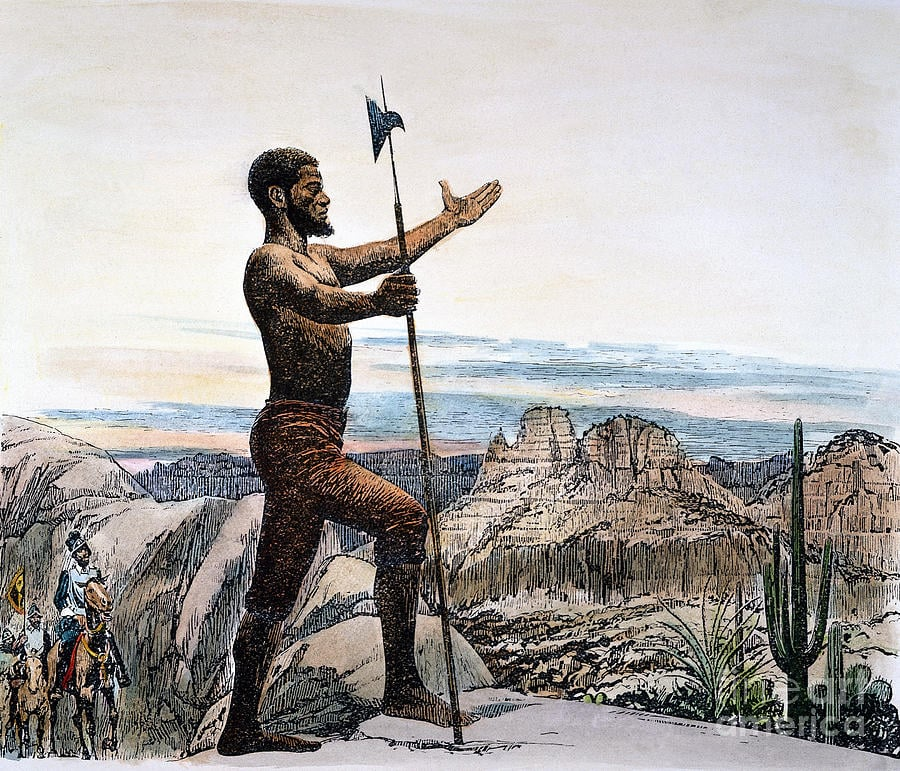
Estevanico and the Spanish Expedition
Estevanico, born in 1500 in present-day Morocco, was one of the first Africans to set foot in what is now Texas. Originally brought to Spain as a slave, he later became a member of the Narváez expedition that set out in 1527 to explore and colonize the region of Florida and parts of the present-day southwestern United States.
The Expedition
The Narváez expedition faced numerous challenges from the beginning, including harsh weather, hostilities from indigenous tribes, and internal conflicts among its members. The expedition’s mismanagement eventually caused it to become shipwrecked on the shores of Texas in 1528. Estevanico and a few other survivors made their way inland, encountering various Native American tribes along the way.
Journey Through Texas
As Estevanico traveled through Texas, he played a crucial role as an intermediary due to his linguistic skills and ability to communicate with different tribes. His experiences helped to forge early relationships between the Spanish and various indigenous peoples. Estevanico’s journey through Texas was marked by significant adventures, including his capture and subsequent escape from hostile tribes.
The Birth of Texas
The travels of Estevanico and the subsequent expeditions that followed laid the groundwork for Spanish colonization in Texas. His explorations contributed to the greater understanding of the region’s geography and cultures, influencing later colonizers. The encounters and exchanges during this time ultimately led to the establishment of missions and settlements, marking the beginning of Texas as a Spanish territory.
Estevanico’s legacy is significant as it highlights the diverse contributions of various individuals to the history of Texas, serving as a reminder of the complex narratives that shaped the early days of the region. His story is emblematic of the larger tapestry of exploration and colonization that defined the Spanish influence in North America.
Blacks Enslaved By Native American Indians
The history of enslaved Africans in North America is complex and intertwined with the narratives of various indigenous peoples. While European colonization and the transatlantic slave trade are often highlighted, it is important to recognize that some Native American tribes also engaged in the practice of slavery.
Native American Slavery Practices
Some Native American tribes, like the Muscogee (Creek), Choctaw, and Cherokee, adopted practices of slavery, incorporating captives from rival tribes or, in some cases, enslaved Africans into their societies. These African individuals were often brought into Native American communities through various means, including European traders who sought to profit from the growing demand for labor in agricultural practices.
Relationships and Dynamics
The relationships between enslaved Africans and Native American tribes varied. In some cases, enslaved individuals worked alongside Native Americans and may have formed alliances or kinship ties. However, the existence of slavery among Native tribes was often influenced by external pressures, such as European colonialism and the desire for resources and land.
Impact on History
The involvement of Native American tribes in the institution of slavery reflects a broader dimension of the historical narrative involving Africans in North America. It underscores the complexity of cultural exchanges and the impact of European colonization on indigenous practices. The interactions between enslaved Africans and Native Americans contributed to the shaping of identities and social structures within these communities.
Black Slaves Build U.S. Capitol
Black Slaves Build U.S. Capitol
The construction of the U.S. Capitol, a symbol of American democracy, holds a significant yet often overlooked chapter regarding the contributions of enslaved African Americans. Beginning in the late 18th century, the Capitol building was an emblem of the nation’s ideals and ambitions, yet the labor that went into its construction was provided by many, including enslaved individuals.
The Role of Enslaved Workers
Enslaved African Americans were integral to the labor force that constructed the Capitol. They performed a variety of tasks, including hauling stone, mixing mortar, and operating construction equipment. These workers were often hired out by their enslavers to contractors, who utilized their labor to meet the demands of the massive building project.
Labor Conditions
The conditions under which enslaved workers labored were harsh and unforgiving. Working long hours under difficult circumstances, they faced physical challenges and a lack of rights. Despite these obstacles, their contributions were essential to the construction progress, shaping the Capitol’s structure and design.
Recognition and Legacy
The involvement of enslaved individuals in the building of the U.S. Capitol serves as a reminder of the complex history of American labor and the contributions of African Americans throughout the nation’s development. Acknowledging this history is crucial in understanding the foundations of American society and the continuing impact of slavery on national identity.
Contemporary Reflections
Today, the legacy of enslaved labor in the construction of the Capitol is part of broader discussions surrounding race, equity, and justice in America. As recognition of these contributions grows, it challenges the narratives surrounding the Capitol’s construction, urging a reexamination of who has historically built the nation and whose labor remains unacknowledged.
The story of the enslaved workers who helped construct the U.S. Capitol is a significant aspect of American history, reminding us of the struggles and contributions of those often left out of the national narrative.
 Digital Information Publishing