

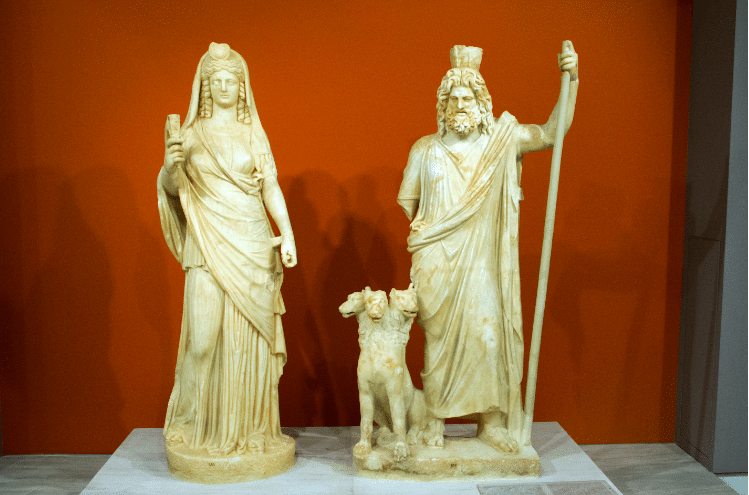
Ptolemy I Soter and the Cult of Sarapis
In 305 BC, Ptolemy I Soter, a general under Alexander the Great and the founder of the Ptolemaic Kingdom in Egypt, underwent significant transformations in his political and religious identity. After declaring himself Pharaoh of Egypt, he sought to legitimize his rule by embracing and promoting the cult of Sarapis.
The Cult of Sarapis
Sarapis was a syncretic deity that combined aspects of the Egyptian god Osiris and the Greek god Apis. This new god was seen as a means to bridge the cultural divide between the Hellenistic Greeks and the native Egyptians. Ptolemy I established the cult to gain popular support among the Egyptians, presenting himself as a divine ruler in the tradition of the pharaohs.
Key Developments
- Founding the Serapeum: Ptolemy I commissioned the construction of the Serapeum in Alexandria, which became the center of the worship of Sarapis. The temple was designed to accommodate both Egyptian and Greek worshippers, reflecting Ptolemy’s dual identity as both a Greek and an Egyptian ruler.
- Religious Integration: By promoting the cult of Sarapis, Ptolemy I integrated Hellenistic and Egyptian religious practices, encouraging a degree of cultural fusion that would characterize the Ptolemaic dynasty.
- Political Strategy: The establishment of this cult was not merely a religious act but also a calculated move to strengthen his reign by gaining the allegiance of the Egyptian populace, who were accustomed to the divinity of their pharaohs.
 Digital Information Publishing