

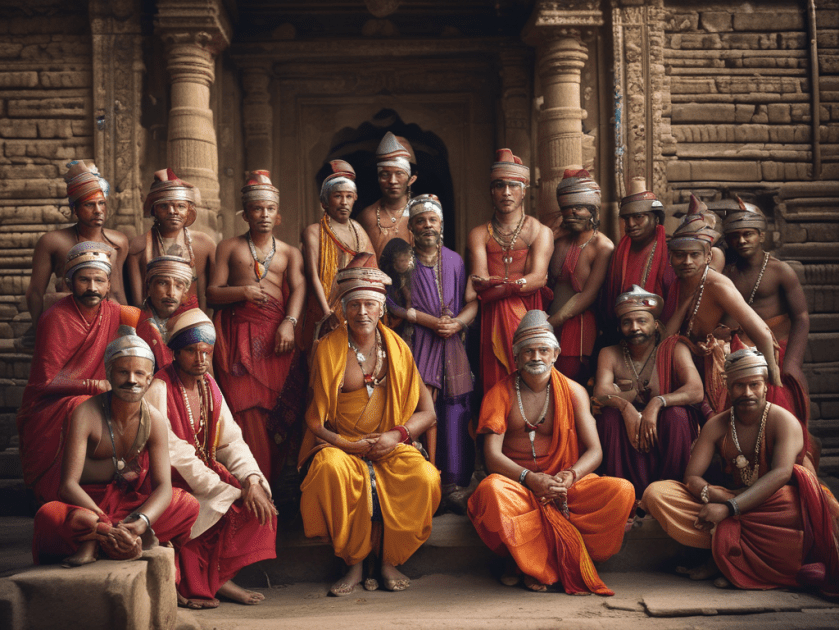
The caste system in ancient India is a complex and multifaceted social structure that has evolved over millennia. Its roots can be traced back to the Vedic period, around 1500 BCE, with the Aryan migration into the Indian subcontinent. The Aryan invasion theory suggests that the arrival of the Indo-Aryans, a nomadic, warlike people from central Asia, had a significant impact on the development of Indian civilization and the caste system.
The caste system is traditionally divided into four main varnas, or social classes: Brahmins (priests and scholars), Kshatriyas (warriors and rulers), Vaishyas (merchants and farmers), and Shudras (laborers and service providers). Beneath these varnas are the “untouchables,” or Dalits, who historically faced severe social and economic discrimination.
The Aryan influence on the caste system is a topic of considerable debate among historians and scholars. While some argue that the Aryans established a hierarchical social structure based on occupation and birth, others contend that the roots of the caste system predate the Aryan migration and were shaped by indigenous cultural and religious practices.
Regardless of its origins, the caste system has had a profound impact on Indian society, shaping social interactions, occupation opportunities, and access to resources for thousands of years. In contemporary India, efforts to address caste-based discrimination and promote social equality continue to be significant societal challenges.
It’s important to approach the topic with sensitivity and nuance, considering the diverse perspectives and ongoing impact of the caste system on Indian society.
Dravidians
The Dravidians are a diverse group of indigenous people primarily originating from the southern regions of the Indian subcontinent. This ethnic and linguistic group has contributed significantly to the cultural and historical tapestry of India. Dravidian languages, such as Tamil, Telugu, Kannada, and Malayalam, have a rich literary tradition and are spoken by millions of people.
The history of the Dravidian people predates the Aryan migration into India and their civilization flourished in the southern part of the Indian subcontinent. Dravidian culture has made enduring contributions to fields such as architecture, art, literature, and philosophy, shaping the cultural identity of the region.
It’s important to note that the interaction between the Dravidian population and the incoming Aryans likely influenced the social and cultural evolution of the Indian subcontinent, including aspects of the caste system. The coexistence and interaction between these distinct cultural groups have played a significant role in shaping the complex social fabric of India.
The Dravidian people continue to play a vital role in contemporary Indian society, contributing to various domains such as politics, literature, cinema, and technology while also striving to preserve their unique cultural heritage. Understanding the history and contributions of the Dravidian people enriches the narrative of India’s diverse and intricate societal structure.
Hinduism
Hinduism is one of the world’s oldest and most diverse religions, with a rich tapestry of beliefs, rituals, and philosophical traditions. It encompasses a wide spectrum of spiritual practices, including meditation, yoga, and devotion to a multitude of deities. At its core, Hinduism emphasizes the concepts of dharma (duty and righteousness), karma (the moral law of cause and effect), and moksha (liberation from the cycle of birth and death).
Central to Hinduism is the belief in a universal spirit or ultimate reality, known as Brahman, which manifests in various forms, including gods and goddesses. The sacred texts known as the Vedas, Upanishads, Bhagavad Gita, and Ramayana, among others, provide philosophical insights, moral guidance, and narratives of divine manifestations.
Hinduism’s vibrant and diverse traditions have fostered a rich tapestry of rituals, festivals, and cultural practices that vary widely across different regions of the Indian subcontinent. From the colorful celebrations of Diwali and Holi to the solemn observance of Varanasi’s aarti ceremony, Hinduism’s cultural expressions are deeply intertwined with everyday life and communal identity.
The philosophical depth and adaptability of Hinduism have contributed to its enduring relevance, not only in India but also increasingly on a global scale. Its emphasis on spirituality, karma, and the interconnectedness of all forms of life continues to inspire individuals seeking meaning and transcendence worldwide.
 Digital Information Publishing