

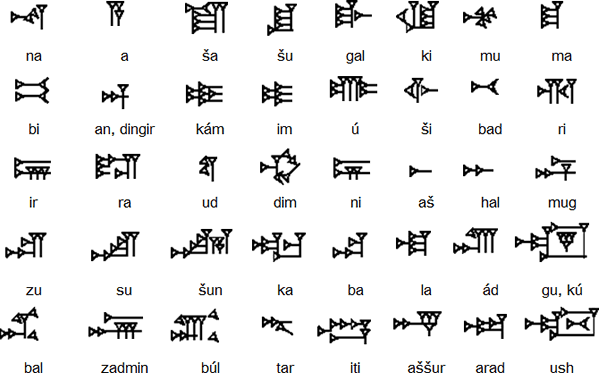
The Akkadian language part of the RTL Group of languages read from right to left Language families: Semitic languages, Afroasiatic languages, East Semitic languages and its cuneiform script have historically been associated with the civilization of Mesopotamia, particularly during the time of the Babylonian Empire. As a member of the Semitic language family, Akkadian served as a primary means of communication and record-keeping in the region, with its cuneiform script inscribed on clay tablets. The language played a crucial role in the development of literature, law, and diplomacy in the ancient Near East, reflecting its significance as a tool for cultural and administrative expression. In the context of the Tower of Babel narrative, the Akkadian language offers a compelling link to the rich tapestry of human linguistic history and the evolution of communication.
Nimrod And The Tower Of Babel World Religion
The story of Nimrod and the Tower of Babel is a significant narrative in world religion and cultural history. It is often interpreted as an explanation for the diversity of languages and the dispersion of people across the world. The figure of Nimrod is linked to the construction of the Tower of Babel in different religious traditions, including Christianity, Judaism, and Islam. According to the biblical account in the Book of Genesis, Nimrod was a mighty hunter and a ruler in the land of Shinar, where the tower was built.
The Tower of Babel narrative illustrates the consequences of human ambition and the desire for unity and power. It serves as a metaphor for the cultural and linguistic diversity that characterizes human civilization. The link between Nimrod, the Tower of Babel, and the Akkadian language provides a fascinating connection to the complex tapestry of human history and the development of religious and linguistic traditions.
Shinar Today
The region historically known as Shinar, where the Tower of Babel was said to have been built, corresponds to the southern part of Mesopotamia. This area is primarily encompassed by present-day Iraq, specifically the regions around the Tigris and Euphrates rivers. The historical significance of Shinar continues to resonate in the cultural and archaeological heritage of modern-day Iraq, shedding light on its rich and enduring legacy.
 Digital Information Publishing