

- United States
- Russia
- China
- United Kingdom
- France
- India
- Pakistan
- North Korea
- Israel
United States Nuclear Arsenal
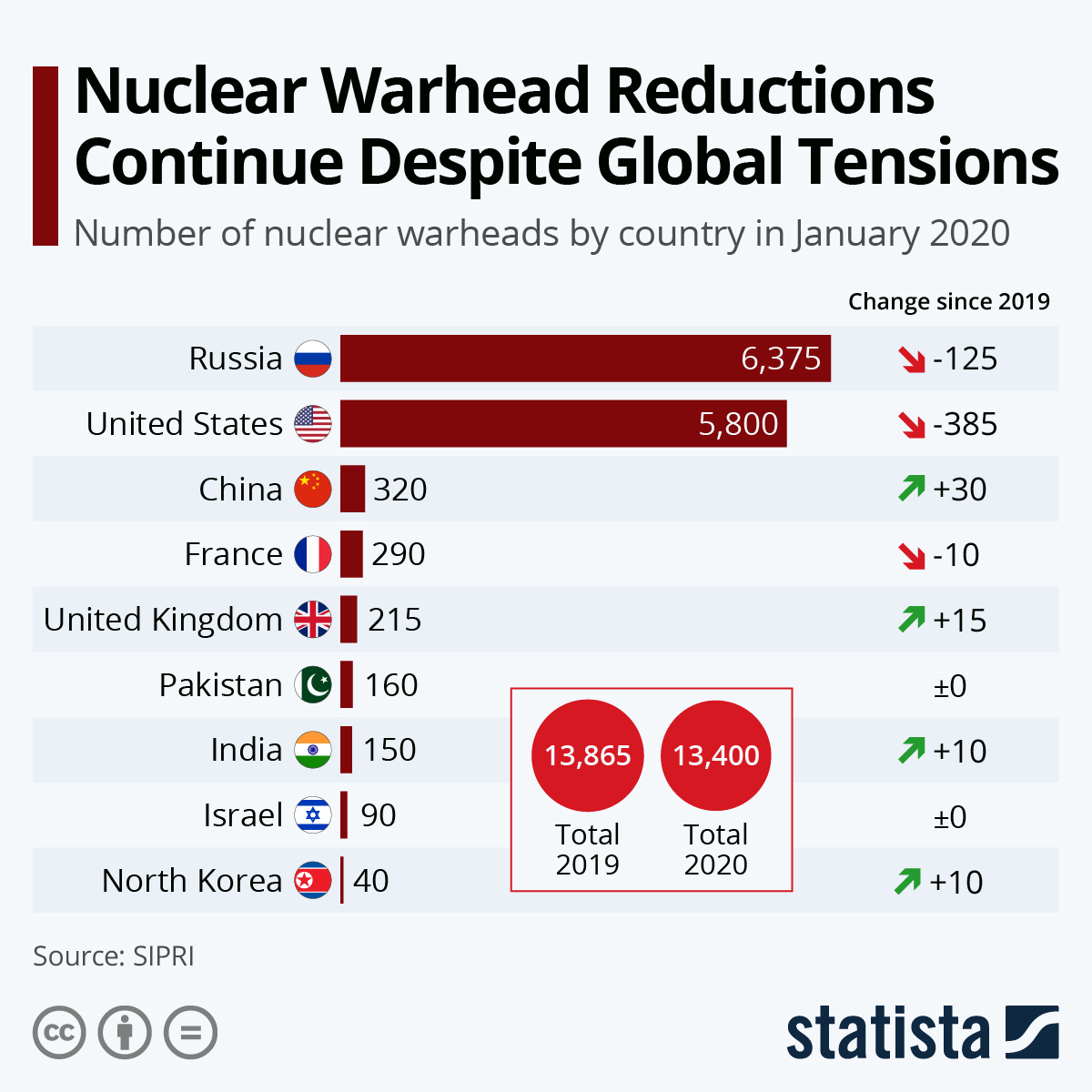
The United States possesses the world’s second largest nuclear arsenal, with an estimated 6,185 nuclear warheads. The country’s nuclear arsenal includes a variety of warhead types, delivery systems, and deployment methods. Notably, the U.S. has a triad of delivery systems consisting of land-based intercontinental ballistic missiles (ICBMs), submarine-launched ballistic missiles (SLBMs), and strategic bomber aircraft. This comprehensive nuclear arsenal is a key component of U.S. national security strategy.
The U.S. nuclear arsenal is subject to various arms control agreements and treaties, such as the New START treaty with Russia, which places limits on the number of deployed strategic nuclear warheads and delivery systems. Additionally, the U.S. maintains a nuclear posture that includes a commitment to non-proliferation, arms control, and disarmament, while ensuring the safety, security, and effectiveness of its nuclear deterrent.
Russia Nuclear Arsenal
Russia Nuclear Arsenal
Russia possesses one of the largest nuclear arsenals in the world, estimated to consist of approximately 6,375 nuclear warheads. Similar to the United States, Russia maintains a diverse array of warhead types, delivery systems, and deployment methods. This includes land-based intercontinental ballistic missiles (ICBMs), submarine-launched ballistic missiles (SLBMs), and strategic bomber aircraft, forming a crucial part of Russia’s national defense strategy.
Like the United States, Russia’s nuclear arsenal is also bound by various arms control agreements and treaties, striving to maintain international stability and security. For instance, Russia is a party to the New START treaty, which aims to limit the number of deployed strategic nuclear warheads and delivery systems.
It’s important to note that as with any topic related to national security, information regarding nuclear arsenals is subject to change, and some details may be confidential or not publicly disclosed.
China Nuclear Arsenal
**_China Nuclear Arsenal_**

China is known to possess a significant and growing nuclear arsenal, although the exact number of warheads is not publicly disclosed. The country's nuclear capabilities encompass a variety of warhead types, delivery systems, and deployment methods, which are integral to China’s national defense strategy.

In line with global efforts on arms control and non-proliferation, China has participated in discussions related to nuclear disarmament and arms control. However, specific details regarding its nuclear arsenal and related policies are not extensively publicized.

Given the evolving nature of national security matters, the information available about China's nuclear arsenal is subject to change and may involve confidential details that are not widely known to the public.
United Kingdom Nuclear Arsenal
The United Kingdom maintains a nuclear arsenal as part of its national security strategy, consisting of an estimated 120 to 225 nuclear warheads. These warheads are deployed using a combination of ballistic missile submarines, forming the sea-based component of the UK’s nuclear deterrent.

Similar to other nuclear-armed states, the United Kingdom is committed to arms control agreements and non-proliferation efforts. The country's nuclear posture includes a clear commitment to reducing the overall stockpile of nuclear warheads, as well as ensuring the safety and security of its nuclear deterrent.

It’s important to note that the United Kingdom’s nuclear arsenal serves as a pillar of its national defense strategy and is subject to ongoing review and assessment to align with international security dynamics.
France Nuclear Arsenal
France Nuclear Arsenal
France maintains a significant nuclear arsenal as part of its national defense strategy, with an estimated 290 nuclear warheads. These warheads are deployed using a combination of air-based delivery systems, such as strategic bomber aircraft, and sea-based delivery systems from submarines.
As a nuclear-armed state, France is committed to upholding arms control agreements and participating in non-proliferation efforts on the international stage. The country’s nuclear posture emphasizes the importance of maintaining a credible and effective deterrent while aligning with global efforts to reduce nuclear stockpiles.
It’s worth noting that information regarding France’s nuclear arsenal is subject to national security considerations and may not be extensively disclosed to the public. The role of France’s nuclear deterrent in its overall defense strategy underscores the ongoing importance of nuclear policy in the international security landscape.
India Nuclear Arsenal
India possesses a significant nuclear arsenal as part of its national security strategy. The exact number of nuclear warheads in India’s arsenal is not publicly disclosed, but it includes a variety of warhead types, delivery systems, and deployment methods. This comprehensive nuclear capability plays a crucial role in India’s defense posture and national security strategy.
In alignment with global efforts on arms control and non-proliferation, India has participated in discussions related to nuclear disarmament and arms control. The country’s nuclear posture emphasizes its commitment to a credible nuclear deterrent while also contributing to international efforts aimed at reducing nuclear stockpiles and promoting stability and security.
It is important to note that details regarding India’s nuclear arsenal and related policies may involve sensitive information and are subject to change due to evolving national security considerations.
Pakistan Nuclear Arsenal
Pakistan Nuclear Arsenal
Pakistan maintains a notable nuclear arsenal as part of its national security strategy, although the exact number of nuclear warheads in its possession is not publicly disclosed. This arsenal includes a variety of warhead types, delivery systems, and deployment methods, which are integral to Pakistan’s defense posture and deterrence capabilities.
In alignment with global efforts on arms control and non-proliferation, Pakistan has underscored its commitment to responsible nuclear stewardship while emphasizing the role of its nuclear capability in deterring aggression and ensuring national security. The specifics of Pakistan’s nuclear arsenal and related policies are closely guarded for national security reasons and remain subject to evolving considerations in the realm of international security.
Given the sensitive nature of nuclear arsenal details, the specifics related to Pakistan’s nuclear capabilities may not be extensively disclosed to the public.
North Korea Nuclear Arsenal
North Korea is widely believed to possess a nuclear arsenal, although the exact size and composition of its nuclear stockpile remain a matter of speculation and analysis by experts. The country’s nuclear capabilities are regarded as a significant factor in regional and global security dynamics.
As a key player in nuclear non-proliferation efforts and international security discussions, the subject of North Korea’s nuclear arsenal is of particular importance and continues to be closely monitored by the global community. Given the sensitive nature of this topic and the evolving dynamics of international security, comprehensive and verifiable information regarding North Korea’s nuclear arsenal may be limited.
Israel Nuclear Arsenal
Israel is widely believed to possess a significant but undisclosed nuclear arsenal, though the exact number of warheads is not publicly acknowledged. The country’s nuclear capabilities include a diverse array of warhead types, delivery systems, and deployment methods, serving as a critical component of Israel’s national defense and deterrence strategy. As with other nuclear-armed states, Israel’s nuclear arsenal and related policies are closely guarded for national security reasons, and specific details regarding its nuclear stockpile may not be extensively disclosed to the public.
NATO MEMBER STATES
- Belgium
- Canada
- Denmark
- France
- Iceland
- Italy
- Luxembourg
- Netherlands
- Norway
- Portugal
- United Kingdom
- United States
- Greece
- Turkey
- Germany
- Spain
- Czech Republic
- Hungary
- Poland
- Bulgaria
- Estonia
- Latvia
- Lithuania
- Romania
- Slovakia
- Slovenia
- Albania
- Croatia
- Montenegro
- North Macedonia
 Digital Information Publishing