

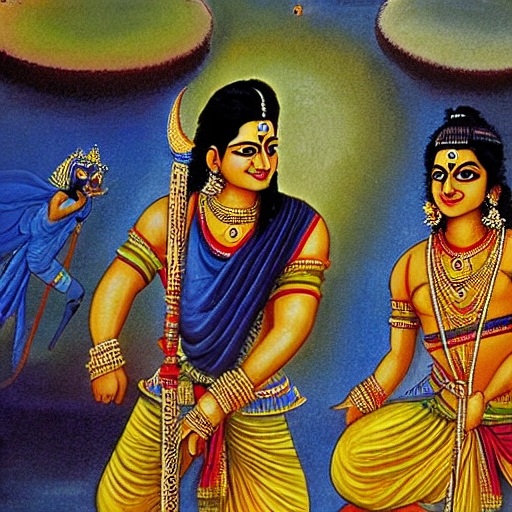
Sanath Kumara in the Mahabharata
Sanath Kumara is a revered sage in Hindu mythology, best known for his appearance in the Mahabharata, one of the ancient Indian epics. In the Mahabharata, Sanath Kumara imparted spiritual wisdom to the wise King Dhritarashtra, offering guidance and counsel in moments of moral and ethical dilemma. His teachings and insights played a significant role in the epic, contributing to its timeless wisdom and philosophies.
Sanath Kumara’s presence in the Mahabharata serves as a beacon of wisdom and spiritual guidance, showcasing the profound influence of sages in shaping the narrative and imparting valuable lessons to the characters and readers alike.
Mahabharata
The Mahabharata is one of the two major Sanskrit epics of ancient India, the other being the Ramayana. It is an epic narrative of the Kurukshetra War and the fates of the Kaurava and the Pandava princes. The Mahabharata also contains much philosophical and devotional material, such as a discussion of the four “goals of life” or purusharthas.
The Mahabharata is revered for its intricate storytelling, profound philosophical teachings, and timeless lessons on morality and righteousness. It remains a crucial element of Hindu culture and has significantly influenced Indian arts, literature, and theology.
The characters and events in the Mahabharata continue to inspire countless adaptations, interpretations, and philosophical discussions, making it a cornerstone of Indian literary and spiritual tradition.
Characters In Hindu Mythology
Characters In Hindu Mythology
Hindu mythology is replete with a diverse array of fascinating and revered characters, each contributing to the rich tapestry of ancient Indian lore. From powerful deities such as Brahma, Vishnu, and Shiva, to the devoted Hanuman and the wise sage Narada, these figures embody profound aspects of spirituality, morality, and cosmic order in Hindu beliefs. Additionally, legendary mortal characters like Rama and Sita, as well as the revered Pandava and Kaurava princes from the epic Mahabharata, further enhance the depth and breadth of Hindu mythological narratives. The enduring relevance of these characters is manifested in the countless artistic interpretations, philosophical discussions, and religious practices that continue to emanate from these timeless stories.
Shamballa
Shamballa in Hindu Mythology
Shamballa, also known as Shambhala, holds a significant place in Hindu mythology and is often associated with the concept of a sacred and harmonious realm. This mythical kingdom embodies the ideals of peace, enlightenment, and spiritual purity, serving as a symbol of utopia in Hindu beliefs. The timeless allure of Shamballa has inspired a wealth of literary and philosophical interpretations, emphasizing its role as a beacon of spiritual aspiration. Its depiction as a place of profound wisdom and enlightenment continues to captivate the imagination of spiritual seekers and storytellers, representing the enduring significance of Shamballa in Hindu mythological traditions.
 Digital Information Publishing