

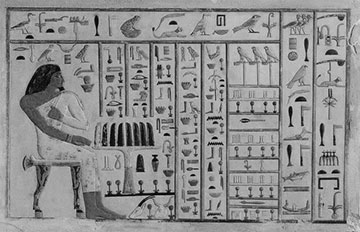
The origin of the system of commerce can be traced back to ancient civilizations such as the Mesopotamian, Egyptian, and Indus Valley civilizations, where bartering and trade were essential for obtaining goods not locally available. As societies evolved, so did the systems of commerce, with the development of currencies, markets, and eventually the complex global trade networks we see today. The concept of commerce has been instrumental in shaping human history and continues to play a pivotal role in the global economy.
Mesopotamian Commerce
The Mesopotamian civilization, often regarded as one of the cradles of human civilization, played a significant role in the development of commerce. Situated in the fertile crescent between the Tigris and Euphrates rivers, Mesopotamia was an ideal location for agricultural surplus, leading to the emergence of trade and commerce.
The Mesopotamians engaged in extensive bartering, exchanging goods such as grains, livestock, pottery, and textiles. This early form of commerce allowed them to acquire resources not locally available and establish economic relationships with neighboring regions.
Furthermore, the Mesopotamians were among the first to develop a form of recorded accounting, using clay tokens to represent goods and quantities. This early system laid the foundation for more sophisticated methods of trade and commerce.
Overall, Mesopotamian commerce not only facilitated the exchange of goods but also contributed to the cultural and economic interactions that would later shape the global trading systems we see today.
Commercial Law
Commercial law, also known as business law or mercantile law, encompasses the legal regulations and statutes that govern commercial and business transactions. It covers a wide range of topics, including contracts, employment law, consumer protection, corporate law, and intellectual property rights. The primary objective of commercial law is to ensure fair and efficient conduct of business operations while providing legal remedies in case of disputes or breaches of contract. Furthermore, commercial law often intersects with other legal areas such as international trade law, banking and finance law, and competition law, reflecting the interconnected nature of modern commerce. As economies and business practices evolve, commercial law continues to adapt to new technologies, global trade dynamics, and changing consumer behaviors, playing a crucial role in facilitating and regulating the complexities of commercial activities.
First Banks Established
The establishment of the first banks can be traced back to ancient civilizations such as the Mesopotamian, Egyptian, and Greek societies. In Mesopotamia, temple complexes served as early banking institutions, where priests conducted financial transactions, including lending and borrowing, and provided secure storage for valuable assets. The development of written records and accounting systems in ancient Mesopotamia further facilitated the functions of early banking, laying the foundation for more sophisticated financial institutions in the future.
In ancient Egypt, the existence of granaries and state-regulated trade necessitated the management of accounts and the provision of credit. This led to the emergence of records documenting lending activities and the use of grain as a form of currency, showcasing the rudimentary elements of banking in this early civilization.
Similarly, in ancient Greece, temples and religious institutions fulfilled the role of financial centers, safeguarding deposits and conducting financial transactions. The practices and principles established in these early banking systems contributed to the development of more formalized banking practices in subsequent centuries.
The evolution of banking from these ancient origins to the complex financial institutions of today demonstrates the enduring significance of early commercial and financial activities in shaping the modern economic landscape.
 Digital Information Publishing