
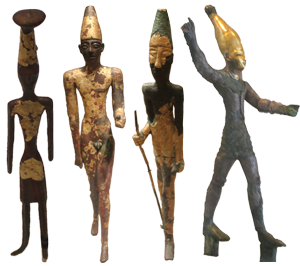
The Phoenicians were an ancient Semitic-speaking people known for their maritime trade and the development of the first widely used alphabet. They inhabited the coastal areas of the Mediterranean, with major cities such as Tyre, Sidon, and Byblos. The Phoenicians were highly influential in the ancient world, spreading their culture and trading goods throughout the Mediterranean region.
The Phoenician alphabet is considered one of the earliest fully developed alphabets. It consisted of 22 consonant letters and was mainly used for writing down trade and commercial transactions. The Phoenician alphabet served as the basis for many other writing systems, including the Greek alphabet and ultimately the Latin alphabet, which is widely used today.
The Phoenicians referred to themselves as “Ken’ani,” which translates to “merchants” in their language. This reflects their prominent role as traders and their strong presence in maritime commerce during ancient times. The term “Ken’ani” encapsulates the essence of Phoenician society and their significant contribution to the world of trade and commerce.
The Term MER in relation to Phoenicians (People Of The Sea)
some e.g. merchants, merchandise, mermaid you get my gist.
Merovingian/Mer-ovee/Mer Latin –
the mythos and ethos of the ‘Sea’, is of paramount importance within the Merovingian narrative…indeed, the very name of The Patriarch of the Dynasty (ie Merovee), as well as his / the Dynasty’s origins, is intimately related to the ‘Sea’…and this of course his attested to, by the Etymology of the name Mer-ovee / Mer-ovingians, with the prefix ‘Mer’, being the Latin equivalent of the English word ‘Sea’….
The Latin root “mer-” is indeed linked to concepts related to the sea, trade, and commerce, as evidenced by words such as “mercator” (merchant) and “mercandise” (merchandise). This connection aligns with the historical identity of the Phoenicians as a maritime trading culture.
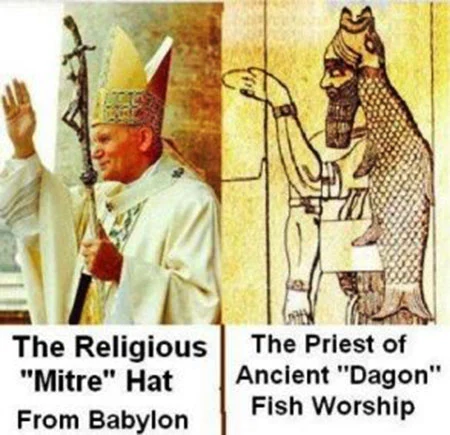
Dagon was an ancient Mesopotamian and Canaanite deity, often depicted as a half-human, half-fish figure. As a major god in the ancient Near East, Dagon was associated with fertility, grain, and fish. The worship of Dagon was prevalent among the Philistines, who venerated him as their principal deity. The biblical narrative also mentions Dagon in relation to the Ark of the Covenant, where the idol of Dagon falls and breaks before the Ark, signifying the supremacy of the Israelite God. The influence of Dagon in ancient mythology and religion reflects the interconnectedness of civilizations in the ancient Near East.
 Digital Information Publishing