

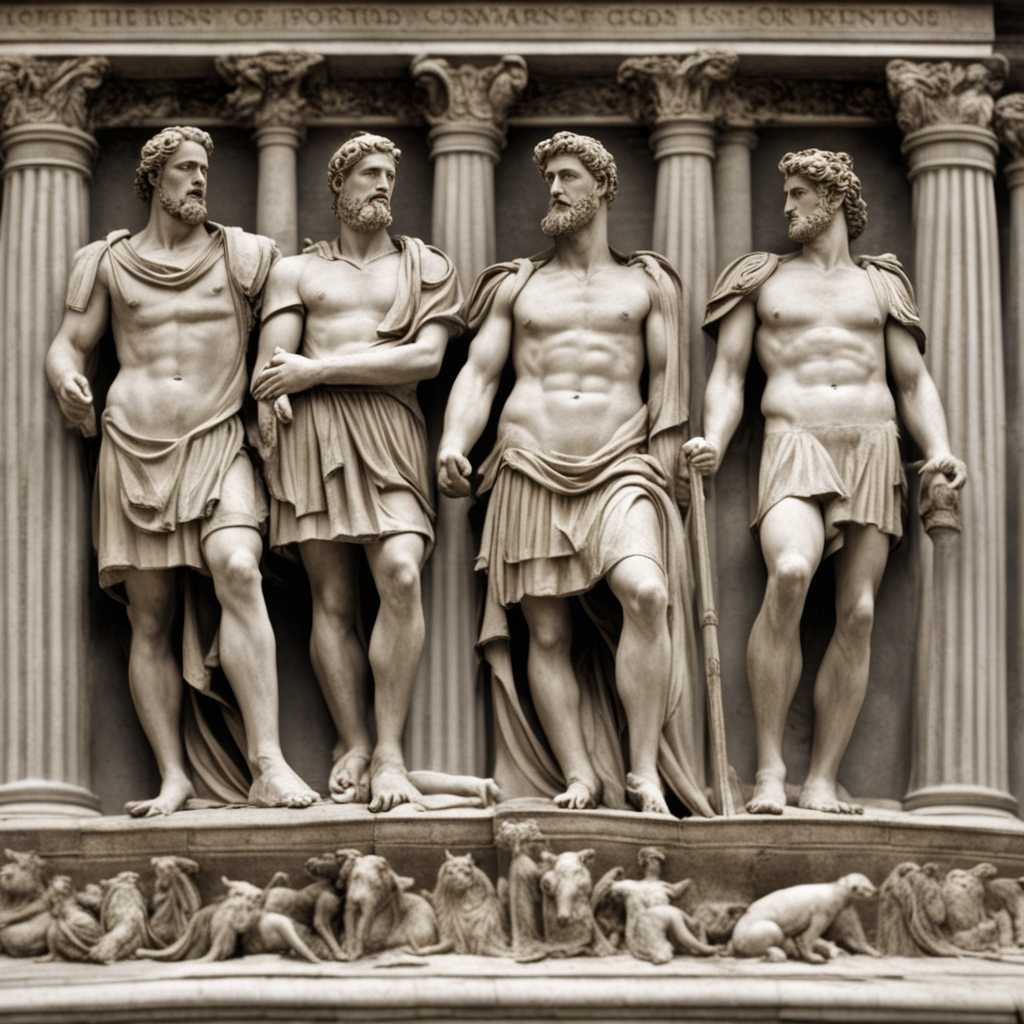
The gods of Roman Britain were a blend of native British deities and Roman gods introduced during the Roman conquest of Britain. Some of the native British gods included Sulis, the goddess of healing and thermal springs at Bath, and Nodens, associated with hunting and healing. The Romans also brought their own deities, such as Jupiter, Mars, Minerva, and others, and these were often syncretized with the local gods. The worship of these deities varied across different regions of Roman Britain, reflecting the diverse cultural and religious influences at the time.
Sulis

Sulis was a significant deity in the religion of the Romano-British people. She was primarily associated with healing and thermal springs, and her most famous shrine was located at Bath, known as Aquae Sulis in Latin. The Romans identified Sulis with their own goddess Minerva, resulting in a syncretic deity worshipped at the Baths. The site was a place of pilgrimage and offerings, reflecting the importance of Sulis in the religious practices of Roman Britain.
Nodens

Nodens was a prominent deity in the ancient religion of the Britons, particularly associated with hunting, healing, and water. His worship was centered around a temple complex at Lydney Park in Gloucestershire, where evidence suggests that he was revered as a powerful and benevolent figure. The site was adorned with intricate mosaics and artifacts that depicted Nodens and his associated symbols, reflecting the significance of his cult in the local religious landscape.
Nodens also displayed syncretic traits with the Roman god Mars, indicating the interweaving of native British beliefs with those introduced during the Roman occupation. This blending of deities underscores the dynamic nature of religious practices in Roman Britain, where diverse cultural influences converged to shape the spiritual panorama of the time.
 Digital Information Publishing