

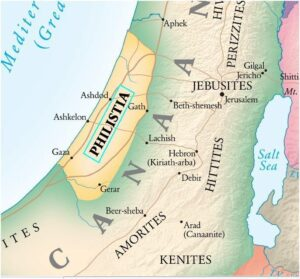
Palestine has a rich and complex history that stretches back thousands of years. The region known as Palestine has been inhabited by various peoples, including Canaanites, Israelites, Philistines, and others. The origins of Palestine can be traced back to ancient times.
In biblical times, the region was known as Canaan and was inhabited by different tribes. The Israelites, led by Moses, settled in the area around the 13th century BCE after their exodus from Egypt. Over time, various kingdoms rose and fell in the region, including the Kingdoms of Israel and Judah.
Throughout history, Palestine came under the control of different empires, including the Persians, Greeks, Romans, Byzantines, and Arabs. In the 7th century CE, Muslim Arab armies conquered the region, establishing the Islamic Caliphate and introducing Islam into the area.
During the First World War, Palestine was part of the Ottoman Empire. After the war, the League of Nations granted Britain a mandate to administer the region, known as the British Mandate for Palestine, which lasted from 1920 to 1948.
The question of Palestine’s origins also relates to the ongoing Israeli-Palestinian conflict. The conflict stems from conflicting national narratives, competing claims to the land, and disagreements over borders, sovereignty, and self-determination.
It is essential to note that the history and origins of Palestine are complex and subject to different interpretations. The topic is sensitive and continues to be a subject of international debate, with efforts made to find a peaceful resolution to the Israeli-Palestinian conflict.
- Late Bronze Age: The region known as Palestine is referred to as “Peleset” in ancient Egyptian inscriptions, potentially denoting a Sea People tribe.
- Iron Age: The term “Philistia” emerges in sources from the ancient Near East, referring to a distinct region along the Mediterranean coast.
- 5th century BCE: The Greek historian Herodotus uses the term “Palaistinē” to describe the coastal region of the Eastern Mediterranean, including parts of modern-day Israel, the West Bank, and Gaza.
- 4th century BCE: Following the conquests of Alexander the Great, the region becomes part of the Ptolemaic Kingdom and is referred to as “Palaistinē” in Greek sources.
- 2nd century BCE: After the establishment of the Seleucid Empire, the region is divided into five districts and referred to as “Palestine” in some Greek and Roman writings.
- 1st century CE: Under Roman rule, the name “Judea” becomes more commonly used to identify the southern part of the region. The term “Judaea/Palaestina” is officially adopted by the Romans after the First Jewish-Roman War, in an attempt to erase Jewish identification with the land.
- 7th century CE: Muslim Arab armies conquer the region, and it becomes part of the expanding Islamic Caliphate. It is referred to as “Filasṭīn” in Arabic.
- 1920: Following the dissolution of the Ottoman Empire after World War I, the League of Nations grants Britain the mandate to administer the region, known as the British Mandate for Palestine.
- 1948: The State of Israel is established, leading to the displacement of many Palestinians during the Arab-Israeli conflict. The remaining territories become incorporated into Jordan and Egypt.
- 1967: The Six-Day War results in Israel occupying the West Bank, including East Jerusalem, and the Gaza Strip, leading to ongoing conflicts and disputes over land and self-determination.
- Present: The name “Palestine” continues to be used to refer to the territories occupied by Israel since 1967, including the Palestinian Authority’s areas in the West Bank and the Gaza Strip, while also representing a national identity for Palestinians seeking statehood and recognition. The status and borders of Palestine remain subject to ongoing negotiations and international debate.
 Digital Information Publishing